
You slept a full eight hours. You did everything right. And yet you rolled out of bed this morning with that familiar tightness creeping up your lower back, stiff hips, and a shoulder that felt like it lost a fight. If that sounds familiar, you're not alone — and more importantly, it's probably not your fault. The best mattress for back pain can genuinely change your mornings, and I say that as someone who spent two years blaming gym sessions and office chairs before finally realizing the real culprit was what I was sleeping on.
This guide is the result of real trial and error, a lot of research, and more than a few mattress returns. Let's get into it.
Key Takeaways
- Medium-firm hybrid mattresses work best for most back pain sufferers
- Your sleep position and body weight should drive your firmness choice
- Zoned lumbar support is one of the most underrated features you should look for
- A 100-night sleep trial is non-negotiable — never buy without one
- Sagging mattresses over 7–8 years old are a major hidden cause of chronic morning pain
- Pillow height and bed base affect spinal alignment as much as the mattress itself
Table of Contents
- Why So Many People Wake Up With Back Pain Even After 8 Hours of Sleep
- Quick Answer — What Type of Mattress Is Best for Back Pain?
- Honestly, I Made This Mistake Too — Buying Based Only on Softness
- Best Mattress for Back Pain by Sleep Position
- This Is Where Things Get Real — Not All Back Pain Is the Same
- Memory Foam vs Hybrid vs Latex — Which One Actually Helps More?
- I've Seen This Happen Many Times — Couples Choosing the Wrong Mattress Together
- Best Mattress Brands for Back Pain in 2026
- Most People Ignore This Part — Your Pillow and Bed Base Matter Too
- Step-by-Step Guide: How to Choose the Right Mattress for Back Pain
- Mattress Certifications and Trust Signals That Actually Matter
- AI Tools and Sleep Technology Are Changing Mattress Shopping
- Mistakes Beginners Make When Buying a Mattress for Back Pain
- Real-Life Use Cases — Who Benefits Most From a Supportive Mattress?
- Mattress Topper vs Buying a New Mattress — Which Is Smarter?
- Quick Answers to Common Back Pain Mattress Questions
- My Final Thoughts After Testing Different Mattresses for Back Pain
Why So Many People Wake Up With Back Pain Even After 8 Hours of Sleep
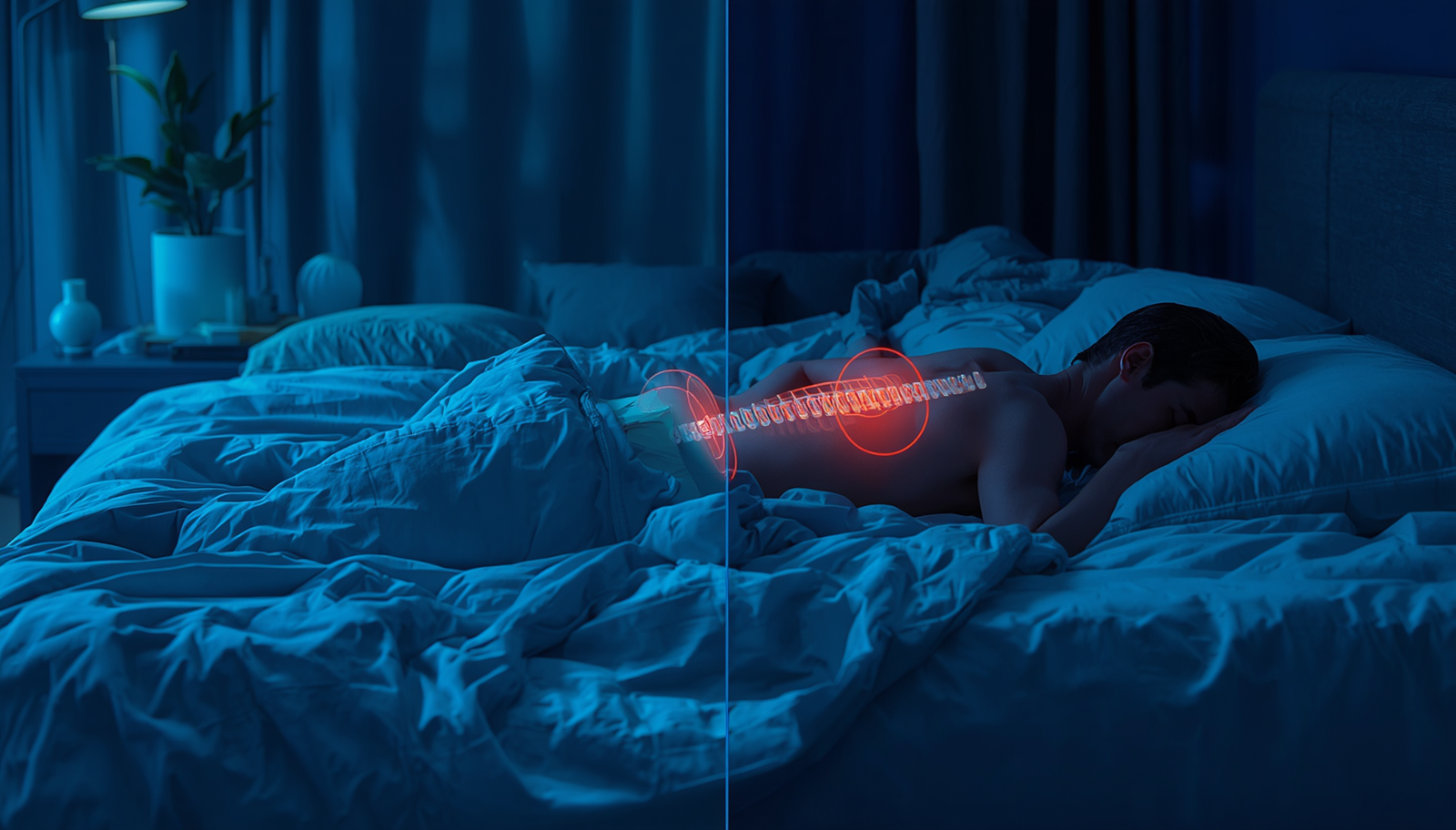
Here's the short answer for anyone who just wants the quick hit: most morning back pain comes from poor spinal alignment during sleep. When your mattress doesn't support the natural curve of your spine, your muscles have to work through the night to compensate. That leaves them fatigued, tight, and painful by morning — even if you technically slept long enough.
According to the American Chiropractic Association, roughly 80% of people will experience back pain at some point in their lives — and sleep surface quality is one of the most controllable contributing factors that people consistently overlook.
Pressure points play a big role here. If your hips or shoulders are sinking too deep (or not sinking enough), your lumbar spine gets pulled out of its neutral position. Sagging mattresses make this worse over time, creating that classic "hammock" effect that slowly wrecks your alignment night after night.
Also read: Bedroom Design Ideas for Comfort: The Sleep Specialist's 2026 Guide
In My Experience, the Mattress Was the Problem — Not Just My Posture
For a long time, I blamed everything except my mattress. My desk chair was too old. I wasn't stretching after workouts. My posture during commutes was terrible. All of that might have been true — but none of it explained why I woke up stiff every single morning and felt almost normal by noon.
That pattern — pain in the morning, improvement later in the day — is actually one of the clearest signs that your sleep surface is the culprit, not an injury or structural issue.
Morning stiffness, shoulder numbness, hip pain on your sleeping side, that pins-and-needles feeling in your arm — these are the mattress's way of telling you it's not doing its job anymore. I ignored them for two years longer than I should have.
What Most People Get Wrong About "Firm" Mattresses
The old advice was always "get the firmest mattress you can find." Chiropractors used to recommend sleeping on the floor. That thinking has largely shifted.
Ultra-firm mattresses can actually create more back pain for many sleepers — especially side sleepers — because they don't allow the shoulders and hips to decompress at all. The result is just a different kind of misalignment.
What most evidence now points to is medium-firm support with spinal neutrality — meaning the mattress should keep your spine in roughly the same position as if you were standing with good posture. That typically means a 5–7 on a firmness scale of 10, depending on your weight and sleep position.
Quick Answer — What Type of Mattress Is Best for Back Pain?
A medium-firm hybrid mattress with zoned lumbar support is the best choice for most back pain sufferers. The coil layer provides structural support and airflow, while pressure-relief foam on top cushions hips and shoulders. Look for zoned support that's firmer under the lower back and softer under the shoulders. This combination works for the majority of sleep positions and body types.
Best Overall Mattress Type for Most Sleepers
Hybrid mattresses earn the top spot because they combine two things that back pain sufferers need: bounce and contouring. The pocketed coil system provides deep support and keeps the spine from sinking, while the foam or latex comfort layers adapt to your body shape.
Most quality hybrids also include zoned lumbar support — reinforced coils or denser foam directly under the lower back — which is something purely foam mattresses often can't replicate as effectively.
The added bonus? Hybrids sleep cooler than all-foam mattresses, which matters more than most people realize (heat increases discomfort and disrupts sleep quality).
Best Mattress Firmness for Lower Back Pain
Here's a practical guide based on body weight and sleep position:
- Under 130 lbs: Medium (4–5 on firmness scale) — lighter sleepers don't compress foam as deeply, so they need softer layers to feel proper pressure relief
- 130–230 lbs: Medium-firm (5–7) — the sweet spot for most people, balancing support and contouring
- Over 230 lbs: Firm (7–8) — heavier sleepers compress more deeply and need firmer support to prevent sinking
Sleep position matters too: side sleepers generally need a slightly softer surface, back sleepers benefit from medium-firm, and stomach sleepers usually need firmer to prevent lower spine hyperextension.
Best Mattress for Back Pain by Sleep Position
Best Mattress for Side Sleepers With Lower Back Pain
Side sleeping is the most common position — and the one most likely to cause hip and shoulder pain if your mattress is too firm. You need enough give at the shoulder to prevent it from rounding inward, while still keeping your hips from dropping and misaligning your spine.
Look for medium to medium-soft comfort layers with contouring memory foam or gel foam. Zoned support that's softer at the shoulder zone is a bonus. The right sleep setup for side sleepers also includes a thicker pillow to keep the neck neutral.
Best Mattress for Back Sleepers Needing Lumbar Support
Back sleeping is actually the most spine-friendly position — but only if your mattress fills the natural lumbar curve rather than letting it hang unsupported. The worst thing for back sleepers is a mattress that sags in the center.
Medium-firm hybrids with zoned coil systems work extremely well here. The reinforced center zone pushes back against the lumbar region just enough to maintain that natural inward curve. Don't go too firm, though — your tailbone and shoulder blades still need to decompress slightly.
Best Mattress for Stomach Sleepers
Stomach sleeping is generally the hardest on the lower back because the abdomen sinks and creates a hyperextension in the lumbar spine. If you can't break the habit, a firmer mattress is essential to minimize that sinking effect.
Go with a firm hybrid or dense foam option — anything that keeps your hips from dropping below your torso. A thin, low-loft pillow (or no pillow) is equally important.
Best Mattress for Combination Sleepers
If you move around all night, you need a mattress that's easy to reposition on — meaning responsive foam or a bouncy hybrid, not a deep memory foam that traps you. Look for latex layers or individually wrapped coils, which spring back quickly and reduce the effort needed to roll over.
Honestly, I Made This Mistake Too — Buying Based Only on Softness
I walked into a mattress showroom, laid down on a plush cloud of a mattress for about four minutes, and thought "this is the one." Reader, it was not the one.
The showroom problem is real. Five minutes of lying still on a mattress tells you almost nothing about how it'll perform eight hours a night under your actual body weight and sleeping positions. What feels blissful in the store often feels like a hammock after three months when the foam starts to break down.
Foam compression over time is one of the biggest under-discussed issues in mattress buying. Budget memory foam mattresses can develop significant body impressions within 18–24 months, and that slow sag is essentially a slow-motion back pain generator.
Signs Your Mattress Is Secretly Causing Back Pain
- You wake up stiff but feel better after moving around for an hour — classic mattress-related pain pattern
- Pain improves when you sleep somewhere else — hotel bed, a friend's couch — dead giveaway
- You can see visible dips or sagging — if it looks sunken, it is
- You toss and turn all night trying to get comfortable — your body is unconsciously searching for a supported position
- Hip pain on whichever side you sleep on — the mattress isn't relieving pressure, it's creating it
How Often You Should Replace a Mattress
Here's a realistic breakdown by mattress type:
- Budget innerspring: 5–6 years
- Memory foam (mid-range): 7–8 years
- Quality hybrid: 8–10 years
- Natural latex: 10–15 years
A common mistake is waiting until a mattress is visibly destroyed before replacing it. By that point, you've likely been sleeping on a degraded surface for two or three years. If you're waking up sore and your mattress is over 7 years old, that's enough reason to start shopping.
Also read: Understanding European Bed Sizes: The Complete 2026 Guide for Expats & Homeowners
This Is Where Things Get Real — Not All Back Pain Is the Same
Best Mattress for Sciatica
Sciatica pain radiates from the lower back through the hip and down the leg, and it's heavily influenced by hip pressure during sleep. For sciatic nerve sufferers, pressure relief around the hips is the top priority — which makes medium-soft to medium-firm mattresses with contouring comfort layers the best bet.
Latex is often recommended for sciatica because it provides responsive contouring without the "stuck" feeling of memory foam, making it easier to shift positions without aggravating the nerve.
Best Mattress for Herniated Disc Pain
Herniated disc sufferers need adaptive support that reduces pressure buildup around the affected area while maintaining spinal neutrality. A medium-firm hybrid with individually pocketed coils and a pressure-relief comfort layer is typically the strongest recommendation here.
Avoid overly soft mattresses that allow too much spinal flexion, and very firm mattresses that create high-pressure points. The goal is even weight distribution across the entire body.
Best Mattress for Arthritis and Joint Pain
Arthritis sleepers need two things that can sometimes conflict: cushioning for sore joints and enough support to keep the body properly aligned. A medium hybrid with a plush euro-top comfort layer tends to strike that balance well.
Motion isolation also matters for arthritis sufferers who share a bed — being disturbed by a partner's movement can cause significant pain when joints are inflamed.
Best Mattress for Plus-Size Sleepers With Back Pain
Heavier sleepers compress mattresses more deeply, which means they need stronger coils, denser foam layers, and better edge support than average. Most standard mattresses are engineered for the 130–200 lb range — if you're above that, you'll bottom out comfort layers faster.
Look specifically for mattresses marketed to plus-size or "heavy" sleepers, with coil gauges of 12–14 (lower number = thicker/stronger wire) and high-density base foam of at least 1.8 PCF (pounds per cubic foot).
Best Mattress for Seniors With Chronic Back Pain
Seniors often need a mattress that's easy to get in and out of — which means avoiding ultra-soft options that create a "sinking" effect. Ease of movement and pressure relief are the dual priorities.
Adjustable base compatibility is worth considering here. A mattress that works with an adjustable frame allows for zero-gravity positioning (head and feet slightly elevated), which significantly reduces lumbar pressure.
Memory Foam vs Hybrid vs Latex — Which One Actually Helps More?
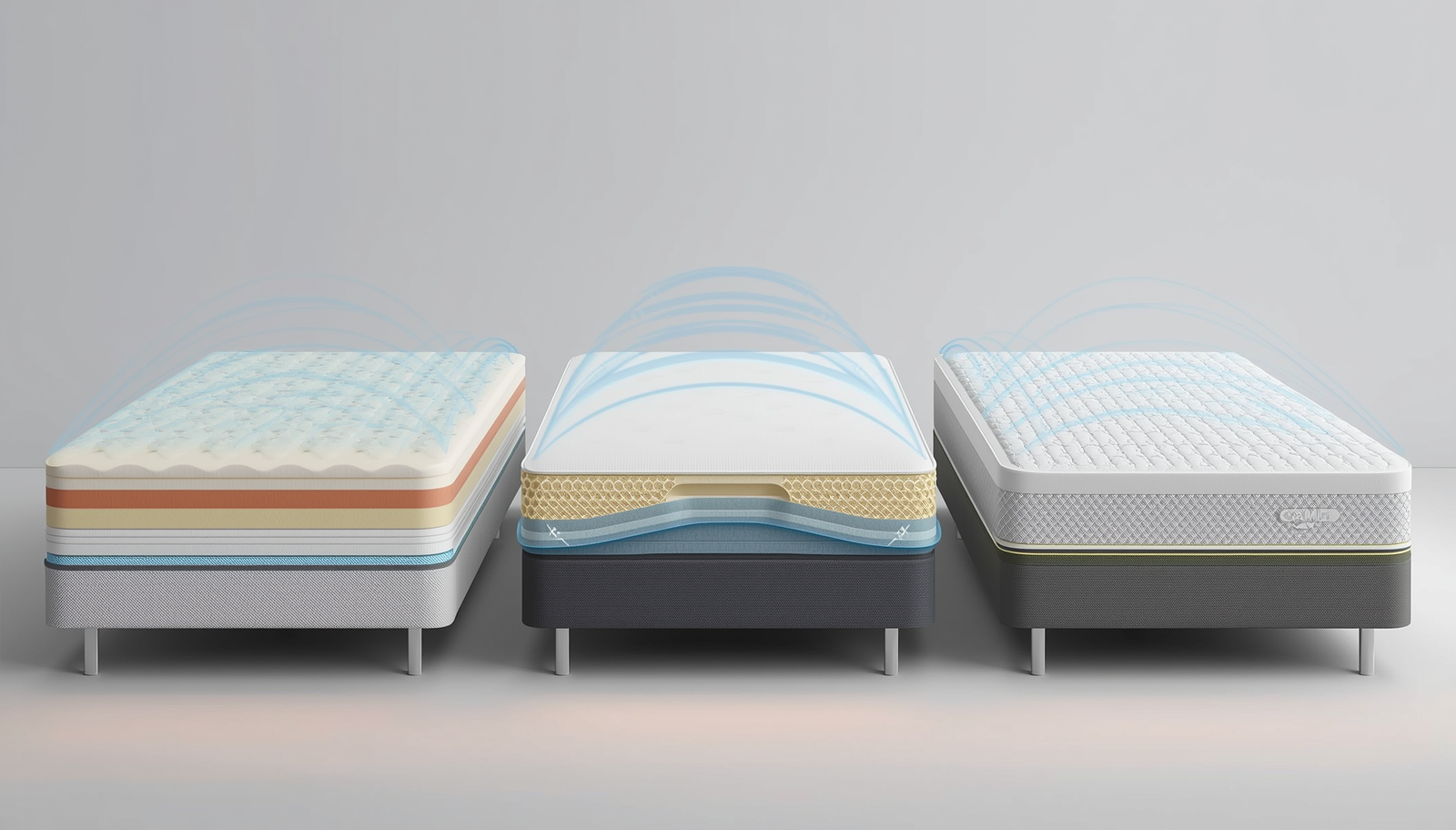
Memory Foam Mattresses
Pros:
- Excellent body contouring and pressure relief
- Superior motion isolation (great for couples)
- Quieter than coil-based mattresses
Cons:
- Retains heat — problematic for hot sleepers
- Slow to respond when changing positions
- Can feel "stuck" for combination sleepers
Hybrid Mattresses
Pros:
- Balanced support and pressure relief
- Better airflow and cooling than all-foam
- Stronger edge support
Cons:
- Heavier and harder to move
- Generally more expensive
Latex Mattresses
Pros:
- Naturally responsive — easy to reposition
- Most durable option (10–15 year lifespan)
- Naturally cooling and hypoallergenic
Cons:
- Most expensive mattress type
- Can feel firmer than expected
Quick Comparison Table
| Type | Firmness Feel | Best For | Cooling | Durability | Motion Isolation | Pressure Relief | Avg Lifespan |
| Memory Foam | Soft–Medium | Pressure relief, couples | Poor | Good | Excellent | Excellent | 7–8 yrs |
| Hybrid | Medium–Firm | Back pain, all positions | Good | Very Good | Good | Very Good | 8–10 yrs |
| Latex | Medium–Firm | Durability, combo sleepers | Excellent | Excellent | Moderate | Very Good | 10–15 yrs |
| Innerspring | Firm | Budget, stomach sleepers | Very Good | Moderate | Poor | Poor | 5–7 yrs |
I've Seen This Happen Many Times — Couples Choosing the Wrong Mattress Together
One of the most common buying mistakes I see is couples defaulting to whatever feels comfortable to both of them during a five-minute showroom test. The problem is that a 145-lb side sleeper and a 210-lb back sleeper have almost opposite needs from a mattress.
The heavier person will compress the mattress more deeply, meaning what feels medium-firm to them might feel rock solid to their lighter partner. Over months, this causes real problems — one person sleeps well, the other doesn't.
Best Mattress for Couples With Different Sleep Preferences
The cleanest solution in 2026 is a split-firmness mattress — two separate firmness zones on a single mattress platform. Brands like Sleep Number and some Saatva models offer dual-zone customization that lets each partner dial in their preferred feel independently.
If split-firmness isn't in the budget, a medium-firm hybrid tends to be the best compromise — firm enough to support the heavier partner, cushioned enough to provide pressure relief for the lighter one. Good motion isolation (pocketed coils + foam layers) is also essential so movement on one side doesn't disturb the other.

Best Mattress Brands for Back Pain in 2026
Note: The following reflects general brand reputations and product lines based on independent testing criteria. I have no financial relationship with any of these brands.
Tempur-Pedic
The gold standard for deep pressure relief. Tempur material was originally developed by NASA, and it shows — the contouring is unlike any other foam on the market. Best for side sleepers and pressure-sensitive back pain. Premium price point, but the durability backs it up.
Saatva
Saatva's Classic model is one of the best-value luxury hybrids available. Their Lumbar Zone technology targets back support specifically, and they offer three firmness options. Strong choice for back and stomach sleepers who want hotel-quality feel with therapeutic support.
Helix
Helix built their entire model around personalization. Their sleep quiz matches you to one of several models based on sleep position, body weight, and pain points. Great for combination sleepers and couples with different needs.
Purple
The Purple Grid is genuinely different from anything else on the market — a hyper-elastic polymer grid that collapses under pressure points (shoulders, hips) and supports elsewhere. Excellent cooling properties. Worth trying if standard foam hasn't worked for you.
Amerisleep
Amerisleep uses their proprietary Bio-Pur foam, which is more responsive and breathable than traditional memory foam. Good eco-credentials and a strong sleep trial. Solid option for eco-conscious buyers who want foam performance without the heat.
DreamCloud
DreamCloud punches significantly above its price point. The luxury hybrid construction — cashmere blend cover, gel foam, and a strong coil base — delivers edge support and lumbar cushioning that usually costs twice as much. Great value pick for back pain relief.
Most People Ignore This Part — Your Pillow and Bed Base Matter Too
A perfect mattress on a broken or incompatible base is still a bad sleep setup. And a great mattress with the wrong pillow will still leave you with neck and upper back pain. Think of it as a sleep system — every element has to work together.
Best Pillows for Spinal Alignment
Pillow loft (height) should match your shoulder width and sleep position. Side sleepers need a higher-loft pillow to fill the space between their neck and shoulder. Back sleepers need a medium-loft pillow that supports the natural cervical curve without pushing the head too far forward. Stomach sleepers are best served by a thin, low-profile pillow or no pillow at all.
Adjustable Bases and Back Pain Relief
Adjustable bases aren't just a luxury feature. Zero gravity positioning — head and feet slightly elevated — offloads pressure from the lumbar spine significantly, and many back pain sufferers report it as a genuine game-changer. If you're dealing with chronic pain, pairing a quality supportive mattress with an adjustable base is one of the most effective upgrades you can make.
Step-by-Step Guide: How to Choose the Right Mattress for Back Pain
Step 1: Identify Your Sleep Position
Side, back, stomach, or combination — your position determines the firmness and contouring level your spine needs. Side sleepers prioritize pressure relief; back sleepers need lumbar support; stomach sleepers need a firmer surface to prevent hyperextension.
Step 2: Match Firmness to Body Weight
Lighter sleepers (under 130 lbs) compress mattresses less deeply and typically need softer comfort layers to achieve pressure relief. Heavier sleepers (over 230 lbs) compress more deeply and need firmer support to prevent bottoming out.
Step 3: Look for Pressure Relief + Lumbar Support
Zoned support systems — where the mattress is firmer under the lower back and softer under shoulders and hips — are the single most important feature for back pain relief. Don't compromise on this.
Step 4: Check Cooling and Motion Isolation
If you sleep hot, prioritize a hybrid or latex mattress over all-foam. If you share a bed, motion isolation (pocketed coils + foam layers) will protect your sleep from your partner's movements.
Step 5: Never Skip the Sleep Trial
This is not optional. Your body takes 2–4 weeks to adapt to a new mattress surface, and you won't know if it's truly right for your back until you've slept on it for at least 30 nights. Any reputable mattress brand offers a 100-night trial minimum. If they don't, shop elsewhere.
Mattress Certifications and Trust Signals That Actually Matter
CertiPUR-US Explained
CertiPUR-US certification means the foam in your mattress has been independently tested for harmful chemicals — no heavy metals, formaldehyde, or ozone depleters. It also means low VOC (volatile organic compound) emissions, which matters for air quality in your bedroom. Look for this on any foam or hybrid mattress you're considering.
OEKO-TEX Certification
OEKO-TEX covers the fabric and textile components of a mattress — the cover, quilting layers, and any natural fill materials. It ensures those materials are free from harmful substances. Particularly relevant if you have skin sensitivities or allergies.
Why Chiropractor Recommendations Matter
Some mattresses carry endorsements from chiropractic associations. These aren't guarantees that the mattress will fix your back pain — chiropractic needs vary significantly by individual — but they do indicate the mattress has been reviewed for basic spinal alignment principles. Use them as one data point, not the deciding factor.
AI Tools and Sleep Technology Are Changing Mattress Shopping
AI Mattress Recommendation Tools
In 2026, most major mattress brands have moved well beyond simple quizzes. Advanced recommendation engines now factor in body weight, BMI, dominant sleep position, pain location, thermal preferences, and even partner dynamics to generate personalized recommendations. Some use body mapping scans from uploaded photos to estimate pressure point risk.
Sleep Tracking Apps That Help Identify Mattress Problems
Apps like Sleep Cycle, Apple Health sleep tracking, Garmin sleep recovery, and Eight Sleep's proprietary system can surface patterns you'd never catch consciously. If your sleep tracking data shows consistently low deep sleep scores or frequent movement overnight, that's data worth taking seriously when evaluating your current mattress.
Smart Mattresses and Pressure Mapping Technology
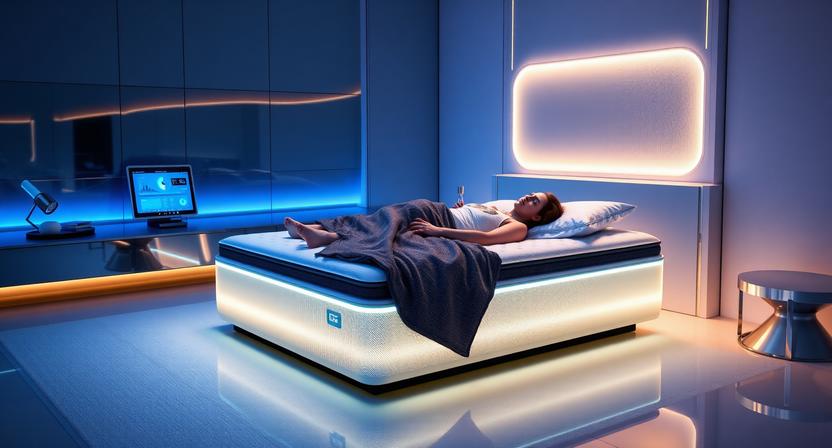
Smart mattresses — particularly from Eight Sleep and Sleep Number — can dynamically adjust firmness and temperature in real time based on your sleep data. Pressure mapping sensors identify where your body is creating the most compression and adjust support accordingly. This is still premium territory, but the technology is becoming more accessible every year.
Mistakes Beginners Make When Buying a Mattress for Back Pain
Buying the Cheapest Mattress Possible
I understand the impulse. But a $200 mattress from a big-box store is almost certainly using low-density foam that will sag visibly within two years. The cost of chronic back pain — in lost productivity, doctor visits, and quality of life — far exceeds the savings. Think of a mattress as a medical investment.
Ignoring Sleep Trials and Return Policies
Buying a mattress without a sleep trial in 2026 is like buying shoes without trying them on. Your body needs weeks to adapt and evaluate — not minutes. Always confirm the trial period before purchasing, and read the fine print on return conditions.
Choosing Based Only on Reviews
A mattress with 50,000 five-star reviews is still not necessarily right for your body. Reviews aggregate experiences from people with wildly different weights, sleep positions, and pain types. Use reviews to filter for quality and durability, then let your own trial period make the final call.
Forgetting About Cooling Features
Heat and inflammation are directly connected. Sleeping hot elevates your core temperature, which disrupts deep sleep stages and can actually worsen inflammatory pain. If you're a warm sleeper dealing with back or joint pain, cooling features — gel foam, phase-change materials, breathable covers, hybrid airflow — aren't optional extras.
Real-Life Use Cases — Who Benefits Most From a Supportive Mattress?
Office Workers Sitting All Day
Extended sitting compresses the lumbar spine and tightens hip flexors throughout the day. By bedtime, your lower back is already under stress. A mattress with strong lumbar zone support gives your compressed spine the decompression it desperately needs during those eight hours.
Athletes Recovering From Training
Muscle recovery happens primarily during deep sleep. A mattress that causes frequent tossing and turning — or creates pressure points that interrupt sleep — directly impairs recovery. Serious athletes often see performance improvements simply from upgrading their sleep surface.
Pregnant Sleepers Needing Pressure Relief
The combination of shifting center of gravity and ligament loosening during pregnancy creates significant hip and lower back stress. A medium to medium-soft mattress with responsive contouring — latex or a plush hybrid — is typically the most comfortable and supportive choice.
People Recovering From Injury or Physical Therapy
Consistent spinal alignment during sleep is as important as the exercises and stretches done during waking hours. A mattress that undoes physical therapy progress overnight is a serious obstacle to recovery. If you're in active rehab, it's worth discussing mattress recommendations with your physical therapist.
Mattress Topper vs Buying a New Mattress — Which Is Smarter?
When a Mattress Topper Is Enough
If your mattress is less than 5 years old and still structurally sound (no visible sagging, coils intact), but just slightly too firm or lacking enough pressure relief, a quality mattress topper can be an effective and cost-efficient fix. A 2–3 inch gel memory foam or latex topper can meaningfully change the feel of a firm mattress.
When You Need a Completely New Mattress
If your mattress has visible body impressions, if the coils are creaking or uneven, if it's over 7–8 years old, or if your pain has been worsening despite trying toppers and accessories — it's time for a full replacement. A topper can't fix structural failure in a mattress. You're essentially putting new tires on a car with a broken axle.
Also read: How to Make Your Bed Feel Like a Luxury Hotel: The Ultimate Guide to Five-Star Sleep
Quick Answers to Common Back Pain Mattress Questions
Is Memory Foam Good for Back Pain?
Yes, memory foam can be excellent for back pain because of its pressure-relieving contouring. The main limitations are heat retention and slow responsiveness. Gel-infused memory foam addresses the heat issue, making it a solid choice for back and side sleepers with pressure-sensitive pain.
Is a Firm Mattress Better for Lower Back Pain?
Not necessarily. A 2003 study in The Lancet found that medium-firm mattresses reduced chronic lower back pain and disability more effectively than firm mattresses. The right firmness depends on your body weight and sleep position — for most people, medium-firm is the sweet spot.
Can a Mattress Fix Posture Problems?
A mattress can support better spinal alignment during sleep, which contributes to overall posture improvement. But it won't override posture problems caused by muscle imbalances or daytime habits. Think of it as one important piece of the puzzle.
Why Does My Back Hurt More on a New Mattress?
It's normal. Your body has adapted to the shape and feel of your old mattress — even if that mattress was causing problems. A new mattress changes your sleeping position slightly, and muscles that haven't been properly supported may initially ache as they adjust. Give it 3–6 weeks before drawing conclusions.
What Mattress Firmness Do Chiropractors Recommend?
Most chiropractors recommend medium-firm to firm, depending on sleep position and body weight. The universal principle is spinal neutrality — the spine should maintain its natural curves during sleep, neither hyperextended nor rounded.
Can a Mattress Topper Help With Sciatica?
A good mattress topper can help by adding pressure relief around the hips, which reduces sciatic nerve compression during sleep. A 2–3 inch latex or gel foam topper is the most commonly recommended option. However, if the underlying mattress is structurally compromised, a topper alone won't solve the problem.
How Long Does It Take to Adjust to a New Mattress?
Most people adapt within 2–4 weeks. Some adjustment period is completely normal and expected. If you're still uncomfortable after 6 weeks, the mattress likely isn't the right fit for your body — which is exactly why sleep trials exist.
Does Mattress Brand Really Matter?
Brand matters for quality control, durability, and warranty support — but it doesn't determine whether a mattress is right for your specific body and pain type. Focus on mattress construction and specifications first, then narrow down by brand reputation.
What Is Zoned Lumbar Support?
Zoned support means different areas of the mattress have different firmness levels. Specifically, the lumbar zone (middle third of the mattress) is reinforced to provide extra support for the lower back, while the shoulder and hip zones are softer to allow those areas to decompress. It's one of the most effective features for back pain relief.
Is a Latex Mattress Worth the Extra Cost for Back Pain?
If budget allows, yes — especially for combination sleepers and those who sleep hot. Latex's natural responsiveness makes repositioning effortless, its durability means it maintains support for 10–15 years, and its cooling properties improve sleep quality for warm sleepers. The upfront cost is higher, but the cost-per-year often comes out competitive.
My Final Thoughts After Testing Different Mattresses for Back Pain
Here's what I've learned after years of trying to solve this problem: there's no universal answer for the best mattress for back pain, but there are clear principles that guide you toward the right decision for your specific body and sleeping habits.
Most people will do well with a medium-firm hybrid — it covers the most ground for the most sleep positions and body types. But if you're a strict side sleeper under 150 lbs, a more contouring foam option might serve you better. If you're a hot sleeper dealing with inflammatory pain, latex deserves serious consideration.
What I'd tell my past self — the one who spent two years blaming everything except the mattress — is this: morning pain that improves during the day is your body telling you something. Listen to it earlier than I did.
If I Had to Start Over, This Is What I'd Focus On First
Sleep position first. Body weight second. Firmness accordingly. Then look for zoned lumbar support, pressure relief at the shoulders and hips, and a mattress type that matches your temperature preferences.
After that: get a mattress with a minimum 100-night trial, test it for at least 30 nights before deciding, and don't let showroom softness override your long-term spinal needs.
The right mattress won't cure structural problems or replace physical therapy. But it will give your body the environment it needs to actually recover during sleep — and that's worth every cent of the investment.