⚠️ Disclosure: This article contains affiliate links. We may earn a small commission if you purchase through them — at no extra cost to you. All opinions are based on real testing and honest experience.
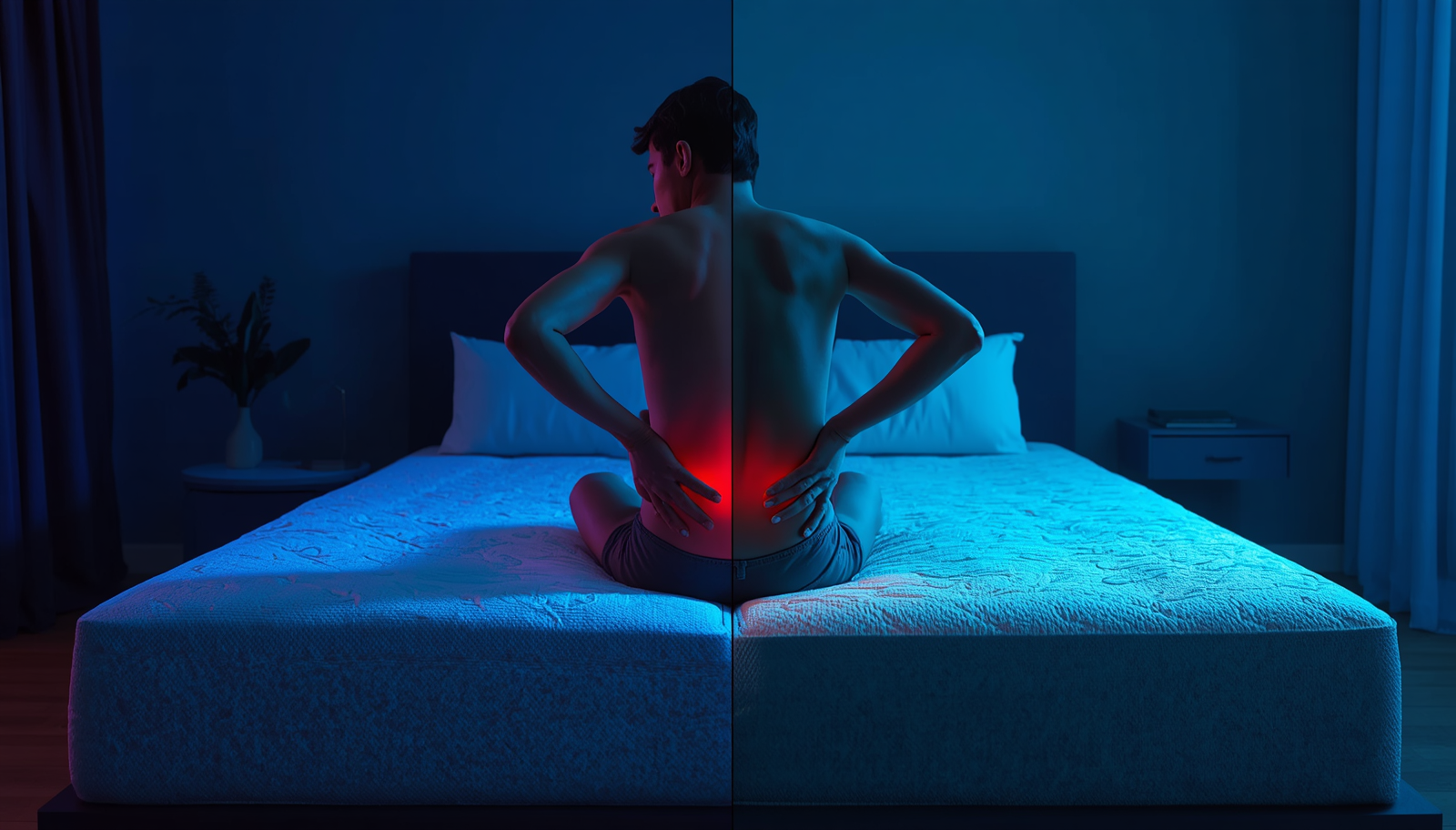
I spent three years sleeping on a mattress I thought was "fine." I had blackout curtains, a consistent bedtime, zero caffeine after 2pm — and I still woke up stiff, groggy, and completely unrested. It wasn't until I started actually testing different mattress types that I realized: the mattress was the problem the entire time. If you're here because you're tired of being tired, you're in the right place. Finding the best mattress for better sleep genuinely changed how I function every single day.
This guide isn't a list of products I've never touched. It's based on hands-on sleep trials, conversations with a physiotherapist friend, and way too many late nights reading sleep research so you don't have to.
📌 Key Takeaways
- Mattress type and firmness affect sleep quality more than most people realize
- Memory foam excels at pressure relief; hybrids offer better airflow and support
- Your sleep position should be the #1 deciding factor for firmness level
- Cooling matters — gel, copper, and airflow channels are not just marketing
- Most people should replace their mattress every 7–10 years
- A good sleep trial (90–365 nights) is non-negotiable when buying online

Why Most People Still Wake Up Tired Even After Sleeping 8 Hours
Here's what most sleep advice skips: you can do everything "right" — no screens, no alcohol, eight solid hours — and still feel destroyed in the morning. The reason? Your mattress could be quietly sabotaging your sleep at the physiological level.
Sleep quality isn't just about duration. REM sleep, deep sleep (slow-wave sleep), and physical recovery all depend on your body being in the right position, at the right temperature, without constant pressure on joints or nerves. A poor mattress disrupts all three.
A study published in the Journal of Chiropractic Medicine found that replacing an old mattress significantly improved sleep quality and reduced back discomfort in participants over just 28 days. I'd seen similar results personally — switching from a sagging spring mattress to a well-constructed hybrid literally halved how often I woke up at night.
Yes. The right mattress reduces pressure points, supports spinal alignment, minimizes motion transfer, and regulates temperature — all of which directly impact how deeply you sleep and how rested you feel in the morning.
Signs Your Mattress Is Secretly Ruining Your Sleep
- Lower back pain that's worse in the morning and improves during the day
- Shoulder or hip stiffness after a full night's rest
- Constant tossing and turning — your body searching for a comfortable position
- Waking up sweaty even in a cool room
- Feeling unrested despite 7–9 hours of sleep
- Partner disturbance — you or your partner waking each other with every movement
Honestly, I ignored most of these for years. I chalked it up to stress. It wasn't stress.
What Most People Get Wrong — Buying Based Only on Softness
Soft doesn't mean comfortable. This is probably the biggest misconception in the mattress world. A lot of people (myself included, originally) assume that a plush, sink-in feel equals better sleep. But if you're a back or stomach sleeper, an ultra-soft mattress will let your hips sag out of alignment — and you'll wake up feeling like you slept in a hammock.
What you actually need is support that matches your body weight distribution and sleep position. Softness is just the surface layer. The support core underneath is what determines whether your spine stays neutral through the night.
Quick Answer — What Is the Best Mattress for Better Sleep?
- Best Overall: Hybrid mattress (e.g., Saatva Classic, Helix Midnight)
- Best for Back Pain: Zoned support hybrid or firm memory foam (e.g., DreamCloud)
- Best Cooling: Gel or copper-infused hybrid (e.g., Bear Elite Hybrid)
- Best Hybrid: Helix Midnight, Saatva, DreamCloud Premier
- Best Budget: Nectar Memory Foam, Zinus Green Tea Foam
No mattress works for everyone. Your sleep position, body weight, pain points, and whether you sleep hot all determine what "best" means for you personally. Use this guide to narrow it down — not just grab a bestseller.
In My Experience, Mattress Type Changes Sleep More Than People Think
I've slept on all of them — cheap innerspring, name-brand memory foam, a hybrid mid-range, and briefly, a latex option a friend let me try. The difference is real. Here's what each actually feels like to sleep on:
Memory Foam Mattress
Memory foam is the go-to for pressure relief. It contours to your body, isolates motion brilliantly, and is genuinely excellent for side sleepers with shoulder or hip discomfort. The problem? It traps heat. Older or denser memory foam can feel like sleeping in a warm hug — which sounds lovely until it's 2am and you're sweating.
Brands like Tempur-Pedic and Nectar have improved airflow in their newer models, but this is still the #1 complaint from memory foam users. If you sleep cool naturally, this might not bother you at all.
Hybrid Mattress
In my experience, hybrids hit the sweet spot for most sleepers. You get pocketed coils for support and airflow at the base, with comfort foam layers on top. The result is a mattress that's responsive (you don't feel "stuck"), supportive, and much cooler than pure foam.
Brands like Saatva, Helix Sleep, and DreamCloud have refined this formula considerably. They're particularly good for couples with different firmness preferences, and for people who move around a lot during sleep.
Latex Mattress
Latex is the dark horse. Natural latex sleeps cooler than foam, has a gentle bounce, and lasts longer than most other materials — often 15+ years with proper care. Talalay latex in particular has a light, buoyant feel that many people find more comfortable than memory foam's "sinking" sensation.
Look for OEKO-TEX or GOLS organic certifications if you're going the natural latex route — it confirms you're getting genuinely natural materials, not a synthetic blend marketed as "latex."
Innerspring Mattress
Traditional innerspring mattresses are bouncy, breathable, and budget-friendly. But they're weak on pressure relief, and the coil-on-coil motion transfer can be brutal if you share a bed. Unless you're on a tight budget or genuinely prefer a firm, bouncy feel, most people will be better served by a hybrid.
Smart & Adjustable Mattresses
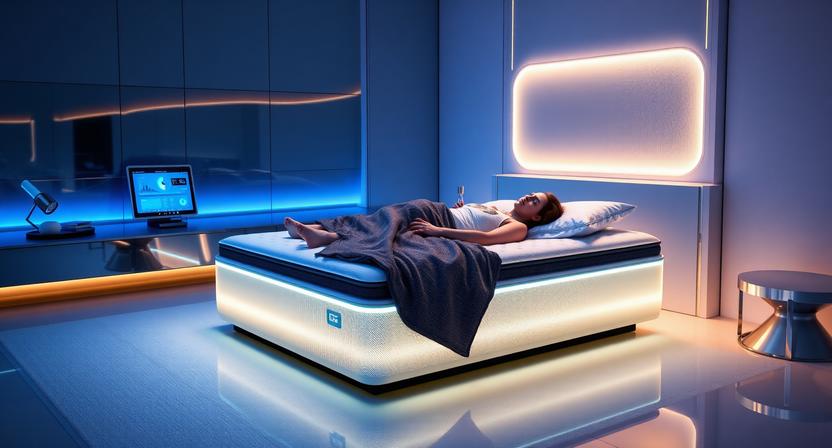
This is the category most reviews are completely ignoring. By 2026, AI-powered adjustable mattresses — like those from Sleep Number's Climate360 line — can track your sleep stages, adjust firmness automatically, and even regulate mattress temperature throughout the night. If you have highly specific sleep needs (or a partner with opposite preferences), this technology is genuinely worth looking at, even at the higher price point.
| Type | Cooling | Pressure Relief | Motion Isolation | Durability | Price Range | Best For |
|---|---|---|---|---|---|---|
| Memory Foam | ⭐⭐ | ⭐⭐⭐⭐⭐ | ⭐⭐⭐⭐⭐ | ⭐⭐⭐ | $400–$2,000 | Side sleepers, light sleepers |
| Hybrid | ⭐⭐⭐⭐ | ⭐⭐⭐⭐ | ⭐⭐⭐⭐ | ⭐⭐⭐⭐ | $800–$3,000 | Most sleeper types, couples |
| Latex | ⭐⭐⭐⭐⭐ | ⭐⭐⭐⭐ | ⭐⭐⭐ | ⭐⭐⭐⭐⭐ | $1,000–$3,500 | Hot sleepers, eco-conscious |
| Innerspring | ⭐⭐⭐⭐⭐ | ⭐⭐ | ⭐⭐ | ⭐⭐⭐ | $300–$1,500 | Budget buyers, firm preference |
| Smart/Adjustable | ⭐⭐⭐⭐⭐ | ⭐⭐⭐⭐⭐ | ⭐⭐⭐⭐ | ⭐⭐⭐⭐ | $2,000–$8,000+ | Tech users, specific health needs |
Also read: Bedroom Design Ideas for Comfort: The Sleep Specialist's 2026 Guide
Best Mattress Based on Your Sleeping Position
Best Mattress for Side Sleepers
Side sleeping puts significant pressure on your shoulders and hips. You need a mattress that cushions those contact points while still supporting your waist so your spine stays straight. Medium-soft to medium firmness (around 4–6 on a 10-point scale) works best. Memory foam and soft hybrid options are your strongest choices here.
Best Mattress for Back Sleepers
Back sleeping is actually one of the most spine-friendly positions — but only if your mattress provides proper lumbar support. You don't want too much give in the lower back area. A medium-firm mattress (around 5–7) is the sweet spot. Look for zoned support features that put extra firmness under the hips and waist.
Best Mattress for Stomach Sleepers
Stomach sleeping is genuinely hard on the lower back and neck. If you can't retrain the habit, at least use a firm mattress that prevents your hips from sinking lower than your chest. This is the one sleep position where going firmer (6–8 range) is almost always the right call.
Combination Sleepers
If you wake up in a completely different position than you started, you need a responsive mattress that "resets" quickly as you move. Pure memory foam can feel sluggish for combination sleepers. A hybrid with a responsive comfort layer — or latex — gives you the freedom to move without fighting the mattress.
This Is Where Things Get Real — Choosing a Mattress for Pain Relief
If you're dealing with chronic pain and hoping a new mattress will help — it genuinely can. But you need to be specific about what's causing your discomfort.
Best Mattress for Back Pain
The research here is pretty consistent: medium-firm mattresses tend to reduce lower back pain more than either very soft or very firm options. What helps most is zoned support — a technology where different parts of the mattress have different firmness levels. Softer under the shoulders, firmer under the hips. Brands like Helix and Saatva do this well.
Best Mattress for Shoulder & Hip Pain
These are pressure point issues, and memory foam's body-contouring properties directly address them. If you're a side sleeper with persistent shoulder pain, a medium-soft memory foam or soft hybrid can make a dramatic difference. I've seen this personally — a friend with rotator cuff issues went from waking in pain nightly to sleeping through after switching mattresses.
Best Mattress for Arthritis or Sciatica
For arthritis sufferers, the priority is minimizing pressure on inflamed joints and reducing motion transfer (so a partner's movement doesn't jar you awake). Adjustable beds with a compatible mattress can also help by letting you elevate your legs or upper body to relieve pressure. CertiPUR-US certified foams are worth prioritizing here to avoid any chemical sensitivities.
Why an Old Mattress Can Cause Fatigue and Insomnia
Here's the thing nobody mentions: a mattress that's sagging even slightly — like a 1-2cm dip in the center — is enough to misalign your spine all night. That chronic low-grade discomfort doesn't always wake you up consciously, but it pulls you out of deep sleep repeatedly. The result? You sleep 8 hours and feel like you barely slept. Most mattresses start losing meaningful support after 7–8 years, even if they don't look visibly worn.
Best Cooling Mattress for Hot Sleepers Who Overheat at Night
Sleeping hot is one of the most underrated sleep disruptors. Your core body temperature needs to drop slightly to initiate and maintain sleep. If your mattress is trapping heat, that natural process gets interrupted.
Cooling Technologies That Actually Work
- Gel-infused foam: Gel beads or swirls absorb and disperse heat. Effective, but has limits at high ambient temperatures.
- Copper-infused foam: Copper is a natural heat conductor. Newer copper-infused mattresses genuinely sleep cooler and have mild antimicrobial properties.
- Airflow channels: Channels cut into the foam layer allow heat to escape. Found in many hybrid comfort layers.
- Phase-change material (PCM) covers: High-tech fabric that absorbs heat when you're warm and releases it when you cool down. Pricier but legitimately effective.
- Moisture-wicking covers: Tencel and bamboo covers won't cool the mattress but will keep the surface feeling fresher.
What Most Brands Don't Tell You About "Cooling Mattresses"
Here's the honest truth: almost every mattress brand markets their product as "cooling." Most aren't. High-density foam retains heat regardless of what's mixed into it. The most reliable cooling comes from mattress construction — specifically, having airflow at the coil level (i.e., a hybrid base). Gel and copper infusions help at the margin, but they're not a substitute for ventilation.
If you genuinely overheat at night, prioritize a hybrid or latex mattress over any foam-based product, regardless of what the marketing says.
Also read: How to Make Your Bed Feel Like a Luxury Hotel: The Ultimate Guide to Five-Star Sleep
Mattress Firmness Guide — Most People Ignore This Part
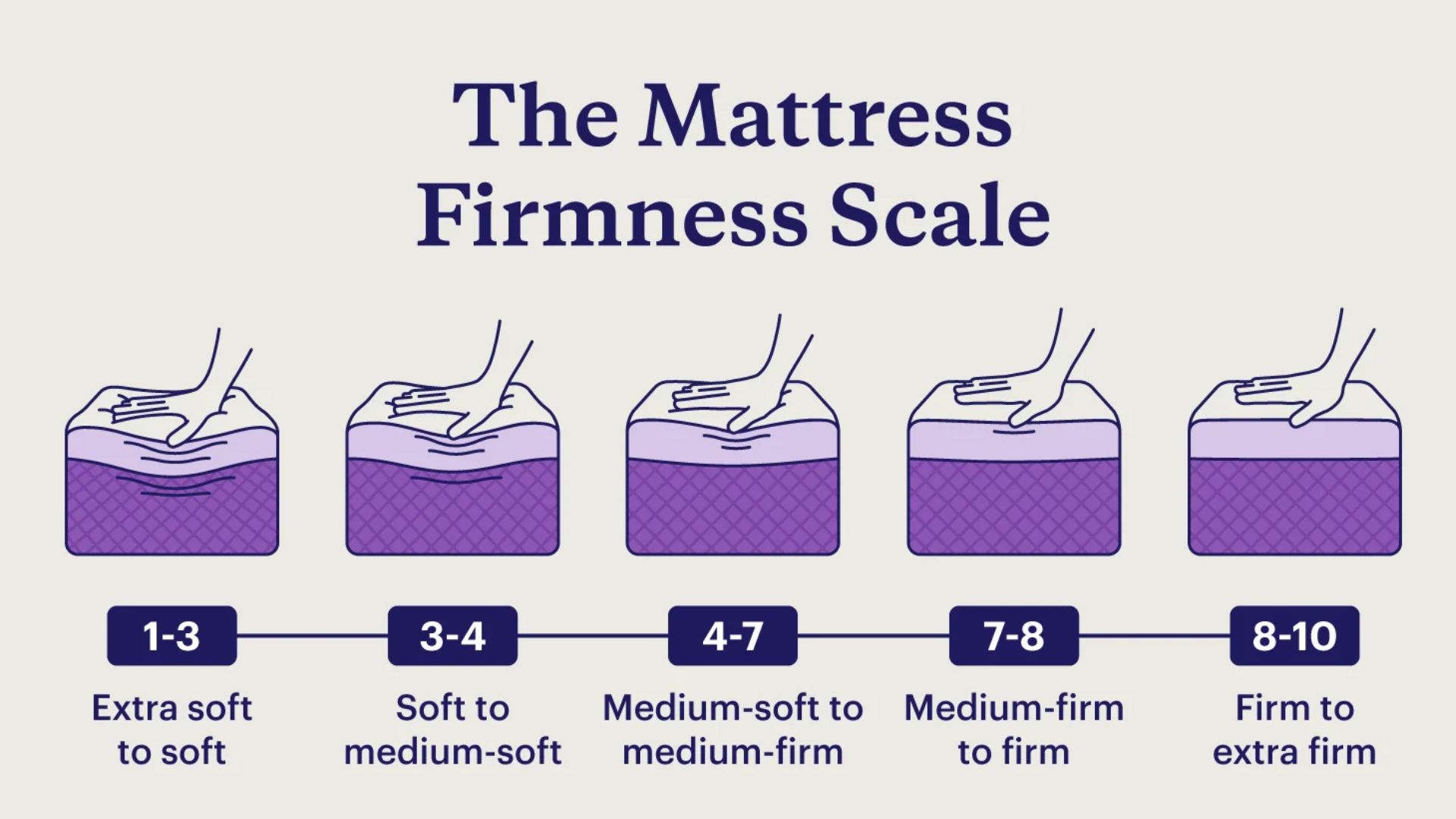
1–3 = Soft | 4–5 = Medium-Soft | 6 = Medium | 7–8 = Medium-Firm | 9–10 = Firm. Most sleepers do best in the 5–7 range. Your sleep position and body weight determine exactly where you should land.
Soft vs Medium vs Firm Mattress
| Firmness | Scale | Best For | Not Ideal For |
|---|---|---|---|
| Soft | 1–4 | Side sleepers, lightweight sleepers (<130 lbs) | Back/stomach sleepers, heavy sleepers |
| Medium | 5–6 | Combination sleepers, average weight | People with strong position preferences |
| Medium-Firm | 6–7 | Back sleepers, couples, average-heavy weight | Petite side sleepers |
| Firm | 8–10 | Stomach sleepers, heavy sleepers (>230 lbs) | Side sleepers, anyone with joint pain |
How Body Weight Changes Mattress Feel
A mattress rated "medium" doesn't feel medium to everyone. A 120-lb person will barely compress the comfort layer and experience it as firm. A 250-lb person will sink through that same layer and experience it as soft. This is why weight-specific firmness recommendations exist — and why trying before buying matters.
How to Test Mattress Firmness Correctly
In-store testing for 5 minutes is nearly meaningless. Your body takes 2–4 weeks to fully adapt to a new sleep surface. That's why sleep trials of at least 90 nights are so important — and you should actually use the full trial period if you're unsure, not return after two weeks because it "feels different."
Best Mattress for Couples With Different Sleep Preferences
Motion Isolation Explained Simply
Motion isolation is how well a mattress absorbs movement. If your partner rolls over and you feel the whole bed shift, your motion isolation is poor. Memory foam leads here — it absorbs movement at the point of contact. Innerspring mattresses are the worst offenders; traditional coils transfer motion across the entire surface.
Edge Support Comparison
Good edge support means you can sit or sleep near the side of the mattress without feeling like you'll roll off. This matters more than most people think — it increases the usable sleep surface for two people and makes getting in and out of bed easier. Hybrids with reinforced perimeter coils generally outperform foam-only options here.
Noise-Free Mattress Options
Pocketed coil hybrids and foam mattresses are essentially silent. Traditional open-coil innerspring mattresses are the ones that creak and squeak. If you're sharing a bed, avoid any mattress with interconnected coil systems.
Memory Foam vs Hybrid vs Latex — Which One Is Actually Better?
| Factor | Memory Foam | Hybrid | Latex |
|---|---|---|---|
| Cooling | Average | Good | Excellent |
| Pressure Relief | Excellent | Very Good | Good |
| Motion Isolation | Excellent | Very Good | Good |
| Bounce/Responsiveness | Low | Medium-High | High |
| Durability | 5–8 years | 8–12 years | 12–20 years |
| Eco-Friendliness | Low | Medium | High (natural) |
| Price Range | $400–$2,000 | $800–$3,000 | $1,000–$3,500 |
My Honest Recommendation Based on Sleep Style
If I were buying today, for the average person: a mid-range hybrid. You get the support and airflow of coils, the comfort of foam, good edge support, and it works for most sleeping positions. Memory foam is better if you're a dedicated side sleeper with joint sensitivity. Latex is better if you sleep hot, care about sustainability, or want the mattress to last 15 years.
Step-by-Step Guide — How to Choose the Best Mattress for Better Sleep
- Identify your sleep position — Side, back, stomach, or combination. This is your first filter.
- Note your pain points — Lower back pain, shoulder pressure, hip discomfort, or general morning stiffness.
- Choose mattress material — Memory foam for pressure relief; hybrid for balance; latex for cooling and longevity.
- Select firmness level — Use the chart above based on your position and weight.
- Compare sleep trials — Look for 100+ nights. 365-night trials (like Saatva's) are ideal.
- Check certifications — CertiPUR-US for foam safety. OEKO-TEX or GOLS for latex. Confirm fiberglass-free materials.
- Set a realistic budget — $800–$1,500 is the sweet spot for quality without paying for brand name. Under $600, you're accepting trade-offs.
Mistakes Beginners Make When Buying a Mattress Online
Choosing Price Over Support
A $200 mattress might feel fine for a week. After three months, the cheap foam will have compressed significantly and you'll be back where you started — plus you'll have trouble returning it.
Ignoring Sleep Trial Policies
Always read the return policy fine print before buying. Some brands charge "comfort return fees." Others require you to donate the mattress locally and provide proof. Know what you're agreeing to.
Falling for Fake "Orthopedic" Marketing
"Orthopedic" is not a regulated term in the mattress industry. Any brand can slap it on any product. Look for actual support features — zoned firmness, coil gauge specifications, foam density ratings — not marketing labels.
Not Checking Mattress Height and Base Compatibility
A 14-inch mattress on an adjustable base may not flex properly. A low-profile foundation can make a thick mattress too high. Measure your bed frame and check the manufacturer's recommendations before buying.
Buying Ultra-Soft Mattresses Without Support
A plush pillow-top with no support core beneath it is the worst of both worlds — pressure points and poor spinal alignment. Softness in the top layer is fine, as long as there's a solid support base underneath.
Budget vs Luxury Mattresses — Is Expensive Always Better?
What You Actually Get in Premium Mattresses
Above $1,500, you're paying for: better cooling technology (PCM covers, active temperature regulation), longer-lasting materials (higher-density foams, stronger coil systems), better edge support, longer warranties, and — honestly — better customer service. These things matter, but they're diminishing returns.
Affordable Mattresses That Still Improve Sleep Quality
The Nectar Memory Foam (around $600–$900) consistently outperforms its price point for pressure relief. DreamCloud Premier delivers hybrid performance under $1,000 with a 365-night trial. Zinus Green Tea Foam is a solid sub-$500 option if you're truly budget-constrained.
Most people buying under $1,000 can still find a mattress that meaningfully improves their sleep — they just need to be more deliberate about matching the product to their specific needs.
AI, Sleep Tracking, and Smart Mattress Technology in 2026
AI-Powered Sleep Tracking Features
Modern smart mattresses — particularly the Sleep Number Climate360 — can detect your sleep stages (light, deep, REM), track heart rate and breathing, and generate a nightly sleep quality score. What sets 2026 models apart is the ability to act on that data: automatically softening or firming sections of the mattress based on your real-time position and sleep stage.
Best Apps for Sleep Optimization
- Sleep Cycle: Uses phone microphone or watch to track sleep stages. Free version is genuinely useful.
- Oura Ring + App: Best non-mattress sleep tracking; detailed readiness and recovery scores.
- Apple Health: Improved sleep stage tracking in watchOS 10+ is now hospital-grade accurate for most metrics.
Smart Mattress vs Traditional Mattress
For most people, a high-quality traditional mattress plus a wearable tracker will deliver 90% of the benefits at 30% of the cost. Smart mattresses make the most sense for people with highly specific health needs, couples with dramatically different preferences, or those who genuinely want data-driven sleep optimization.
Real-Life Mattress Use Cases Most Reviews Ignore
Best Mattress for Athletes and Recovery
Recovery happens in deep sleep. Athletes need a mattress that supports muscle recovery — meaning minimal pressure on sore tissue, good temperature regulation (to keep the body in optimal recovery range), and enough firmness to keep alignment intact. Medium-firm hybrids or latex are ideal.
Best Mattress for Seniors
As we age, joint sensitivity increases and getting in/out of bed becomes more difficult. Seniors generally benefit from a mattress with excellent pressure relief (memory foam or soft hybrid), strong edge support (easier to stand from), and a height of 10–14 inches for accessibility.
Best Mattress for Heavy Sleepers
Sleepers over 230 lbs need high-density foam (at least 1.8 lb/cu ft for polyfoam, 5 lb/cu ft for memory foam) and coils with a lower gauge (thicker wire = stronger support). Standard consumer mattresses often degrade faster under heavier loads — look for brands that explicitly offer options for heavier sleepers.
Best Mattress for Teenagers and Growing Bodies
Teenagers need solid posture support while their spine is still developing. Medium-firm support is generally appropriate, with enough give to accommodate side sleeping. Budget-wise, a quality innerspring or entry-level hybrid ($400–$700) is practical at an age where preferences will change.
Also read: Understanding European Bed Sizes: The Complete 2026 Guide for Expats & Homeowners
Mattress Certifications, Safety, and Off-Gassing Concerns
What CertiPUR-US Actually Means
CertiPUR-US is a third-party certification for polyurethane foam. It confirms the foam is made without ozone depleters, heavy metals, formaldehyde, or prohibited flame retardants, and that VOC emissions are below safe thresholds. It does not certify the entire mattress — only the foam components.
OEKO-TEX and Organic Certifications Explained
OEKO-TEX Standard 100 certifies textiles (including mattress covers) are free from harmful substances. GOLS (Global Organic Latex Standard) certifies organic latex. GOTS (Global Organic Textile Standard) covers organic cotton and wool covers. These matter most if you have chemical sensitivities or are buying for a baby or young child.
Fiberglass-Free Mattress Guide
Some budget foam mattresses use fiberglass as a fire barrier — and if the mattress cover is ever removed or damaged, microscopic glass fibers can spread throughout your bedroom. Always check that a mattress is explicitly labeled fiberglass-free. This issue has affected several popular budget brands.
How Long Mattress Off-Gassing Usually Lasts
New foam mattresses off-gas VOCs (volatile organic compounds) when first unpacked. For most CertiPUR-US certified mattresses, this dissipates within 24–72 hours with ventilation. If you're sensitive to chemical smells, unpack the mattress in a well-ventilated room and air it out before putting on bedding.
Mattress Maintenance Tips That Extend Lifespan and Sleep Quality
How Often to Rotate Your Mattress
Rotate your mattress 180° every 3–6 months for the first two years, then once per year after that. This distributes wear more evenly and prevents body impressions from forming in one spot. Most modern foam and hybrid mattresses are one-sided (don't flip), but rotation still matters.
Signs It's Time to Replace Your Mattress
- Visible sagging or body impressions deeper than 1 inch
- Coils or springs that you can feel through the top layer
- Consistent morning stiffness or new pain that started recently
- The mattress is 8+ years old and sleep quality has declined
- Persistent odors that won't dissipate
Cleaning and Protection Tips
Use a waterproof mattress protector from day one — it extends mattress life significantly and keeps certifications valid (some brands void warranties without one). Vacuum the surface monthly. Spot-clean spills immediately with cold water and mild detergent. Never soak the mattress or use bleach.
Why Mattress Foundations Matter
A sagging or broken foundation will destroy even the best mattress within months. Box springs wear out too. Make sure your base provides consistent, flat support — this is especially critical for memory foam, which requires a solid, non-flexible surface to perform as designed.
FAQ — Questions People Ask Before Buying a Mattress
What is the best mattress for better sleep quality?
It depends on your sleep position, pain points, and whether you sleep hot. For most people, a medium-firm hybrid mattress provides the best balance of support, pressure relief, and temperature regulation.
Is memory foam good for spinal alignment?
Yes, when paired with appropriate firmness. Memory foam contours to your body, which can support spinal alignment — but if it's too soft for your weight and position, it can cause sinkage and misalignment.
Which mattress stays coolest at night?
Latex and hybrid mattresses with pocketed coil bases are the coolest. Among foam options, copper-infused foam with phase-change material covers performs best. Avoid dense memory foam if you run hot.
Can a bad mattress cause fatigue?
Absolutely. A poor mattress disrupts deep sleep and REM sleep through pressure points, misalignment, and temperature discomfort — even without fully waking you. Chronic fatigue with no other explanation is a major sign your mattress needs replacing.
What firmness is best for side sleepers?
Medium-soft to medium (4–6 on a 10-point scale). Side sleepers need cushioning at the shoulders and hips to prevent pressure points, while still maintaining enough support to keep the spine aligned.
Are hybrid mattresses better than memory foam?
For most people, yes — hybrids offer better airflow, edge support, and responsiveness. Memory foam wins for motion isolation and deep pressure relief. The "better" choice depends on your specific needs.
How long should a mattress last?
Quality memory foam and hybrid mattresses: 8–12 years. Natural latex: 12–20 years. Budget foam: 5–7 years. Replace when you notice sagging, pain, or declining sleep quality regardless of age.
Can a mattress improve deep sleep?
Yes. A mattress that eliminates pressure-point disruptions and keeps your body at an optimal temperature allows you to stay in deeper sleep stages longer. Research supports this — sleep quality scores improve measurably after switching to a better-matched mattress.
Which mattress is best for back pain?
A medium-firm hybrid with zoned support is the most consistently recommended option for back pain. Brands like Helix Midnight Luxe, Saatva Classic, and Bear Elite Hybrid perform well in this category.
Do expensive mattresses improve sleep quality?
Up to a point. Mattresses in the $800–$1,500 range can dramatically improve sleep quality for most people. Beyond $2,000, improvements are incremental and mainly about durability, cooling technology, and customization options.
Before You Buy — The Mattress Checklist I Wish I Had Earlier
If you've made it this far, you know more about mattresses than 90% of buyers walking into a showroom. Here's what to actually do before pulling the trigger:
- Know your primary sleep position (and firmness that matches it)
- Identify any specific pain points — back, shoulder, hip
- Decide between memory foam, hybrid, or latex based on your cooling needs
- Check for CertiPUR-US certification (and fiberglass-free confirmation)
- Confirm the sleep trial is at least 90 nights with free returns
- Match the mattress to your base/foundation type
- Set a realistic budget — don't go under $500 if you can help it
- Plan to use the full adjustment period before making a final judgment
The best mattress for better sleep isn't the most expensive one, or the one with the best ads. It's the one that fits your body, your sleep position, and your pain profile — and that you actually give a fair chance during the trial period.
Sleep isn't a luxury. You spend a third of your life on that mattress. Make it count.