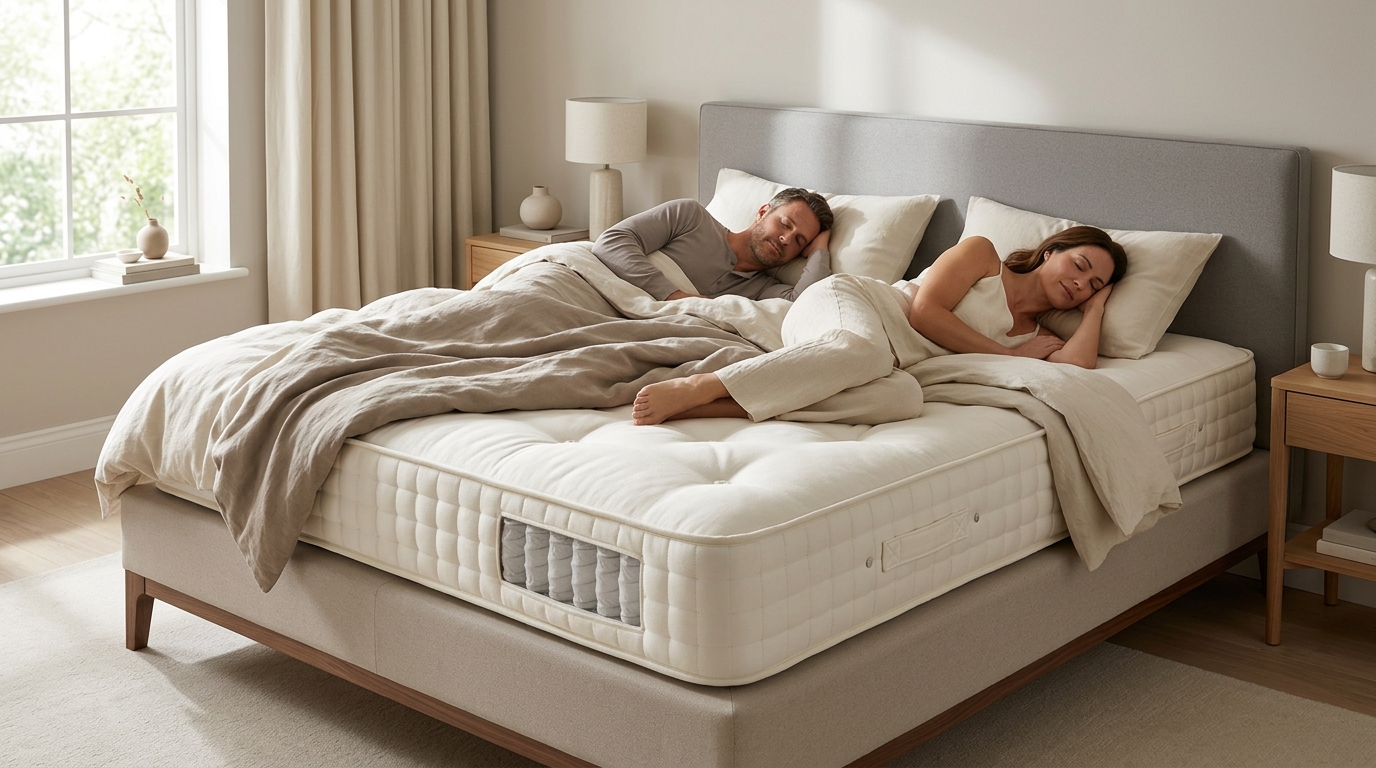
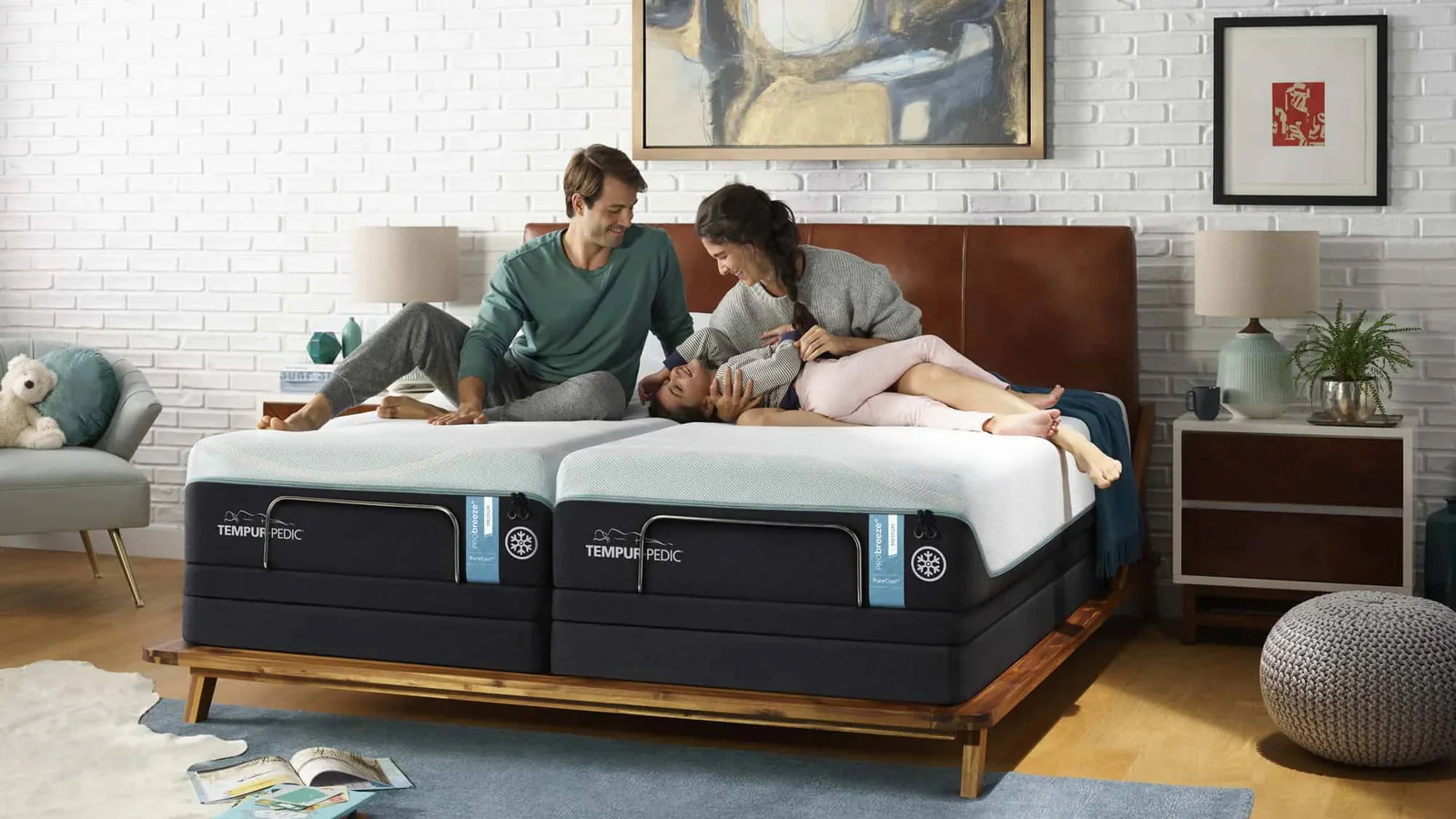
After years of waking up drenched in sweat and tossing all night, I finally figured out why my sleep quality sucked despite a decent room setup. It wasn't just the summer heat or my blankets — it was my old memory foam mattress trapping every bit of body heat. Switching to a cooling mattress changed everything. If you're a hot sleeper struggling with restless nights, this guide breaks down exactly why cooling mattresses improve sleep and how to pick one that actually delivers.
Key Takeaways:
- Cooling mattresses help regulate core body temperature for faster sleep onset and deeper rest.
- They reduce night sweats, micro-awakenings, and improve recovery for athletes and hot sleepers.
- Technologies like PCM, open-cell foam, and hybrids offer real benefits backed by sleep science.
- Not all "cooling" claims are equal — smart shopping prevents disappointment.
Table of Contents
- Quick Answer: Why Do Cooling Mattresses Improve Sleep?
- What Most People Get Wrong About Sleeping Hot
- The Sleep Science Behind Cooling Mattresses
- How Cooling Mattresses Actually Work
- In My Experience, These Are the Biggest Benefits People Notice First
- Do Cooling Mattresses Really Work? What Research and Real Users Say
- This Is Where Things Get Real: Who Benefits Most From a Cooling Mattress?
- Cooling Mattress Materials Compared
- Honestly, I Made This Mistake Too: Common Cooling Mattress Buying Mistakes
- Cooling Mattress vs Traditional Mattress: Is the Upgrade Worth It?
- Most People Ignore This Part: Your Bedroom Environment Matters Too
- Step-by-Step Guide: How to Choose the Best Cooling Mattress
- I've Seen This Happen Many Times: Cooling Mattress Buying Scenarios
- AI and Sleep Optimization: The Future of Cooling Sleep Technology
- Pros and Cons of Cooling Mattresses
- Frequently Asked Questions About Cooling Mattresses
- What the Best Sleep Experts Agree On About Cooling Mattresses
Image filenames used: sleep-science-cooling-mattresses.jpg, how-cooling-mattresses-work.jpg, cooling-mattress-materials-compared.jpg
Quick Answer: Why Do Cooling Mattresses Improve Sleep?
Cooling mattresses are designed with breathable materials and heat-dissipating technologies like gel infusions, phase change materials (PCM), open-cell foams, and enhanced airflow systems to prevent heat buildup during the night. They actively help your body maintain its natural temperature drop, leading to faster sleep onset, fewer interruptions, and more restorative deep and REM sleep stages.
In short, better temperature regulation means better sleep efficiency, reduced night sweats, and improved overnight recovery. For hot sleepers, this can be a game-changer.
What Most People Get Wrong About Sleeping Hot
Most folks blame their room temperature or heavy duvet when they wake up overheated. But the real culprit is often the mattress itself. Traditional foam traps heat like a sponge, radiating it back at you all night long. I used to think my bedding was the issue until I tested different setups.
Overheating isn't always about the thermostat — your mattress's heat retention plays a massive role. Many sleepers waste money on fancy sheets instead of addressing the foundation.
Why Your Body Needs to Cool Down Before Sleep
Your circadian rhythm drives a natural drop in core body temperature at night to signal sleep time. This drop helps trigger melatonin production. When your mattress fights this process by holding onto heat, sleep onset delays and quality suffers. Studies show this thermoregulation is key to falling asleep faster.
The Hidden Sleep Disruptions You May Not Notice
Even if you don't remember waking fully, overheating causes micro-awakenings, restless movements, and fragmented REM and deep sleep. These subtle disruptions leave you groggy, even after eight hours in bed.

The Sleep Science Behind Cooling Mattresses
I've spent years testing mattresses and diving into sleep research, and the science is clear: temperature regulation directly impacts sleep architecture. According to the Sleep Foundation and various studies, maintaining an optimal sleep temperature around 60-67°F (15-19°C) in your immediate environment promotes better rest.
Research on thermoregulation shows that cooler conditions support deeper sleep cycles. One study highlighted how body cooling enhances slow-wave sleep, crucial for physical recovery.
Core Body Temperature and Sleep Quality
Your core temperature needs to decrease for sleep to begin efficiently. Cooling mattresses facilitate this by dissipating heat rather than absorbing it, helping you transition into sleep faster and stay there longer.
REM Sleep, Deep Sleep, and Temperature Regulation
Overheating during REM can fragment dreams and memory consolidation. In deep sleep (N3), heat buildup reduces time spent in restorative stages. Proper cooling supports uninterrupted cycles for better cognitive and physical health.
Why Heat Retention Causes Poor Sleep
Dense foams and poor airflow create a heat trap. Humidity makes it worse by reducing evaporation. This leads to increased heart rate and more awakenings throughout the night.
How Cooling Mattresses Actually Work
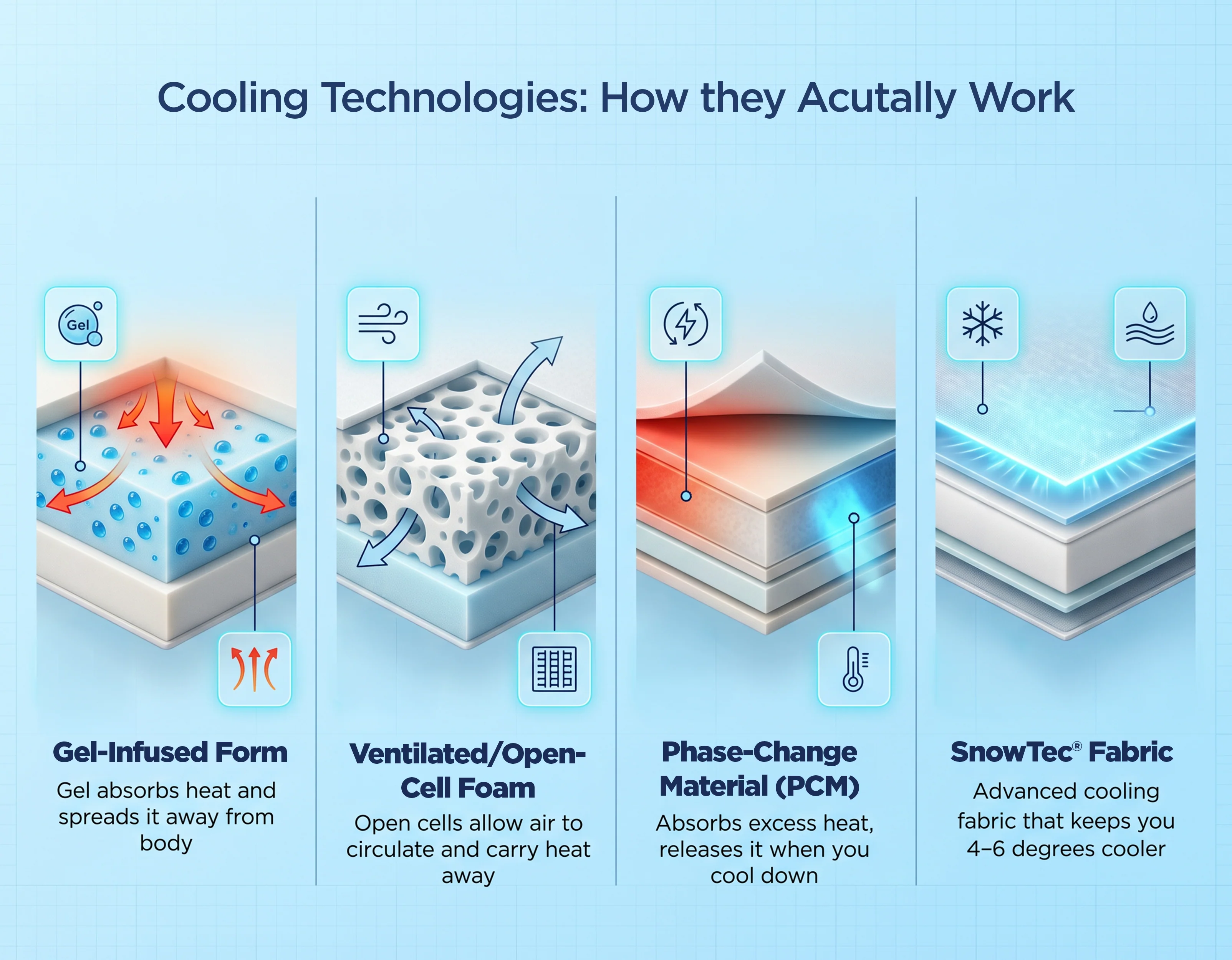
Cooling mattresses don't "refrigerate" your bed — they manage heat transfer more effectively than standard models. Here's the step-by-step breakdown:
- Advanced covers and toppers pull heat away from your body.
- Breathable internal structures allow air circulation.
- Special materials absorb and release heat as needed.
- Overall design prevents the "sink-in" heat trap common in traditional foam.
Heat Dissipation Technology
Surface layers with high thermal conductivity quickly move heat away from your skin.
Open-Cell Foam Construction
Unlike traditional memory foam, open-cell designs have air pockets that promote airflow and reduce heat accumulation.
Gel-Infused Memory Foam
Gel particles help disperse heat, though effectiveness varies by formulation and can diminish over time.
Graphite and Copper Infusion Technology
These minerals excel at heat transfer. Graphite, in particular, offers strong conductivity for sustained cooling.
Phase Change Materials (PCM)
PCMs absorb excess heat when you get warm and release it as you cool, providing dynamic temperature balancing. Premium options use this for consistent performance.
Hybrid Mattress Cooling Systems
Pocketed coils create natural air channels, boosting breathability far beyond all-foam designs.
In My Experience, These Are the Biggest Benefits People Notice First
After testing dozens of beds in real home conditions — including humid summers — I've seen consistent patterns. Customers and my own sleep logs confirm these wins.
Falling Asleep Faster
Reduced tossing and turning means hitting the pillow and drifting off quicker. One tester dropped from 45 minutes to under 15.
Fewer Night Sweats
Especially helpful during menopause or in warm climates. Many report dry sheets for the first time in years.
Better Sleep Continuity
Fewer full awakenings lead to longer deep sleep stretches and feeling more refreshed.
Improved Recovery and Physical Performance
Athletes notice better muscle recovery and lower morning soreness thanks to enhanced deep sleep.
Enhanced Comfort for Couples
Less shared heat means both partners sleep better without fighting over the thermostat.
Also read: Bedroom Design Ideas for Comfort: The Sleep Specialist’s 2026 Guide
Do Cooling Mattresses Really Work? What Research and Real Users Say
Science supports the link between temperature and sleep quality. Studies show body cooling aids sleep onset and maintenance. Real users on forums and reviews echo faster sleep and fewer sweats, though results vary by product and conditions.
Scientific Findings on Sleep Temperature
Research from sources like the National Sleep Foundation confirms cooler sleeping surfaces improve perceived comfort and sleep continuity.
Consumer Feedback Trends
Positive: Dramatic reduction in overheating. Complaints: Some cooling fades after 1-2 years or feels too firm.
Realistic Expectations Buyers Should Have
Cooling mattresses regulate rather than chill like an AC. Room setup still matters hugely. Don't expect miracles in extreme heat without supporting changes.
This Is Where Things Get Real: Who Benefits Most From a Cooling Mattress?
Not everyone needs one, but certain groups see life-changing improvements.
Hot Sleepers
If you kick off covers or wake sweaty, signs point to needing better thermoregulation.
People With Night Sweats
Hormonal or medical issues amplify benefits when paired with proper diagnosis.
Couples Who Sleep Warm
Different preferences become manageable with even heat distribution.
Athletes and Fitness Enthusiasts
Faster recovery supports training consistency.
Menopause and Hot Flashes
Temperature management eases disruptive symptoms.
People Living in Warm Climates
Summer nights become bearable.
Back Pain Sufferers
Pressure relief plus cooling reduces discomfort that interrupts sleep.
Also read: Understanding European Bed Sizes: The Complete 2026 Guide for Expats & Homeowners
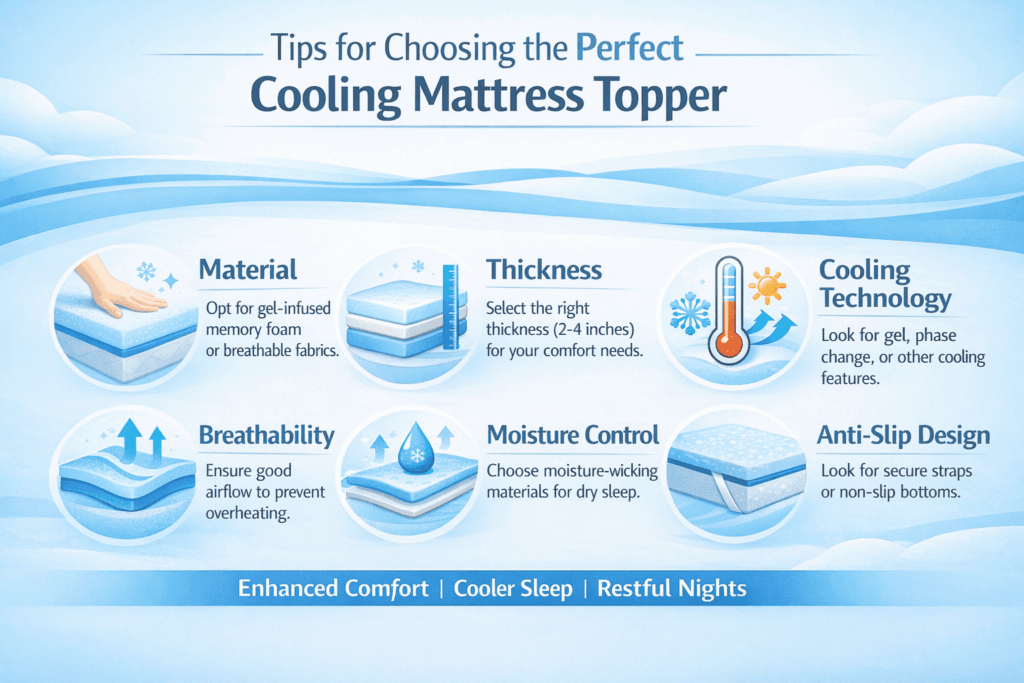
Cooling Mattress Materials Compared
Understanding differences helps you match the right bed to your needs.
Memory Foam vs Cooling Memory Foam
Standard versions trap heat; cooling variants with infusions or open cells perform much better while keeping contouring comfort.
Latex vs Cooling Foam
Natural latex offers excellent inherent airflow and bounce with natural cooling properties.
Hybrid vs All-Foam Mattresses
Hybrids win for breathability thanks to coils.
Pocket Spring vs Foam Construction
Springs promote superior air circulation with strong support.
Comparison Table: Cooling Mattress Technologies Explained
| Technology | Cooling Performance | Durability | Cost | Best For | Potential Drawbacks |
| Gel Foam | Good initial | Medium | Medium | Budget hot sleepers | Cooling fades over time |
| Open-Cell Foam | Very Good | High | Medium-High | Everyday use | Less contouring |
| Latex | Excellent | Very High | High | Natural preference | Higher price, firmer feel |
| Hybrid | Excellent | High | Medium-High | Couples, support needs | Heavier |
| PCM | Outstanding dynamic | High | Premium | Consistent regulation | Cost |
| Graphite Foam | Strong conductivity | High | Medium-High | Heat transfer focus | Variable by brand |
| Copper Foam | Good antimicrobial + cooling | Medium-High | Medium | Hygiene conscious | Less studied long-term |
Honestly, I Made This Mistake Too: Common Cooling Mattress Buying Mistakes
I've fallen for hype and learned the hard way.
Falling for Marketing Buzzwords
"Ice-cooling" or "Arctic" often overpromise. Look for real tech specs instead.
Ignoring Mattress Breathability Ratings
Airflow throughout the entire mattress matters more than surface feel.
Choosing the Wrong Firmness
Too soft traps heat; balance support with your body type.
Using Heat-Trapping Protectors
Cheap vinyl ones ruin cooling. Opt for breathable alternatives.
Focusing Only on Surface Cooling
Deep-layer performance determines long-term success.
Cooling Mattress vs Traditional Mattress: Is the Upgrade Worth It?
Performance-wise, cooling options shine in temperature control and sleep continuity. Value comes from better health and fewer replacement cycles.
Performance Comparison
Cooling wins for hot sleepers; traditional may suffice for cool sleepers.
Cost vs Value Analysis
Higher upfront but better long-term ROI through improved sleep quality.
When a Cooling Mattress Is Not Necessary
If you sleep cool naturally or live in cold climates, standard models work fine.
Also read: How to Make Your Bed Feel Like a Luxury Hotel: The Ultimate Guide to Five-Star Sleep
Most People Ignore This Part: Your Bedroom Environment Matters Too
A great cooling mattress pairs with smart habits.
Ideal Bedroom Temperature
Aim for 60-67°F for optimal sleep.
Humidity and Airflow
Keep humidity 30-50% and ensure good ventilation.
Cooling Bedding and Pillows
Moisture-wicking sheets and ventilated pillows amplify benefits.
Mattress Protectors That Preserve Cooling Performance
Choose Tencel or similar breathable fabrics.
Step-by-Step Guide: How to Choose the Best Cooling Mattress
- Identify Your Sleep Temperature Profile: Track hot/cold tendencies.
- Determine Your Preferred Mattress Feel: Soft, medium, or firm.
- Compare Cooling Technologies: Match to needs and budget.
- Evaluate Breathability Features: Coils, vents, covers.
- Check Trial Period and Warranty: Minimum 100 nights.
- Review Independent Testing Data: Look beyond marketing.
- Match the Mattress to Your Climate: Stronger cooling for humid areas.
I've Seen This Happen Many Times: Cooling Mattress Buying Scenarios
The Hot Sleeper in a Humid Climate
Hybrid with PCM and strong airflow wins.
The Athlete Seeking Faster Recovery
Graphite or latex for deep sleep support.
The Couple With Different Temperature Preferences
Zoned hybrid offers balanced comfort.
The Menopause Sleeper Experiencing Hot Flashes
High breathability plus moisture management.
The Luxury Sleep Upgrade Buyer
Premium PCM and natural materials for longevity.
AI and Sleep Optimization: The Future of Cooling Sleep Technology
Smart mattresses with sensors adjust temperatures dynamically. AI apps analyze data for personalized advice.
Smart Mattresses and Temperature Tracking
Adaptive systems respond in real-time.
AI-Powered Sleep Monitoring
Predictive insights optimize routines.
Mobile Apps That Help Improve Sleep Quality
Track environment and suggest tweaks.
Can AI Recommend the Right Mattress?
Helpful for data-driven picks, but human factors still matter.
AI Sleep Assistant vs Human Sleep Expert Comparison
| Feature | AI Sleep Assistant | Human Sleep Specialist |
| Personalization | Data-based, scalable | Holistic, nuanced |
| Cost | Low/subscription | Higher |
| Availability | 24/7 | Scheduled |
| Data Analysis | Excellent volume | Contextual interpretation |
| Medical Guidance | Limited | Qualified |
| Product Recommendations | Algorithmic | Experience-driven |
| Long-Term Support | Ongoing monitoring | Relationship-based |
Pros and Cons of Cooling Mattresses
Pros
- Better sleep quality and efficiency
- Reduced overheating and night sweats
- Improved comfort and recovery
- Enhanced deep and REM sleep
Cons
- Higher upfront cost
- Performance varies by brand and conditions
- Some tech loses effectiveness over years
- Marketing can set unrealistic expectations
Frequently Asked Questions About Cooling Mattresses
Do cooling mattresses actually improve sleep quality?
Yes, for hot sleepers by supporting natural temperature regulation and reducing disruptions.
Can cooling mattresses help with night sweats?
Absolutely — many users report significant reduction when paired with breathable bedding.
What mattress material stays coolest?
Latex and well-designed hybrids with PCM or graphite typically perform best long-term.
Are cooling mattresses worth the money?
For those who overheat, the sleep gains justify the investment.
How long does cooling technology last?
Quality options maintain effectiveness 5-8+ years with proper care.
Can cooling mattresses help with menopause symptoms?
They manage temperature swings effectively for many women.
Do cooling mattresses improve deep sleep?
By minimizing heat-related awakenings, yes.
Is memory foam always hot?
Traditional yes, but modern cooling versions mitigate this well.
What's the ideal sleeping temperature?
Around 60-67°F for the room, with surface regulation.
Which cooling mattress is best for couples?
Hybrids with strong edge support and even cooling.
What the Best Sleep Experts Agree On About Cooling Mattresses
Experts emphasize temperature's role in sleep. Cooling tech differs greatly, so selection is key. Realistic gains include better consistency and comfort rather than total transformation.
Key Takeaways Supported by Research
- Temperature impacts sleep quality profoundly.
- Different cooling technologies suit different needs.
- Proper mattress selection combined with good sleep hygiene maximizes results.
Realistic Results You Can Expect
Improved comfort, fewer sweats, and more consistent energy levels.
Final Decision Framework
Buy if you overheat regularly. Skip if cool sleeper in mild climate. Test via trials and prioritize breathability.
If you're ready for better nights, start by assessing your current setup and consider a quality cooling mattress matched to your needs. Your future self — and mornings — will thank you.