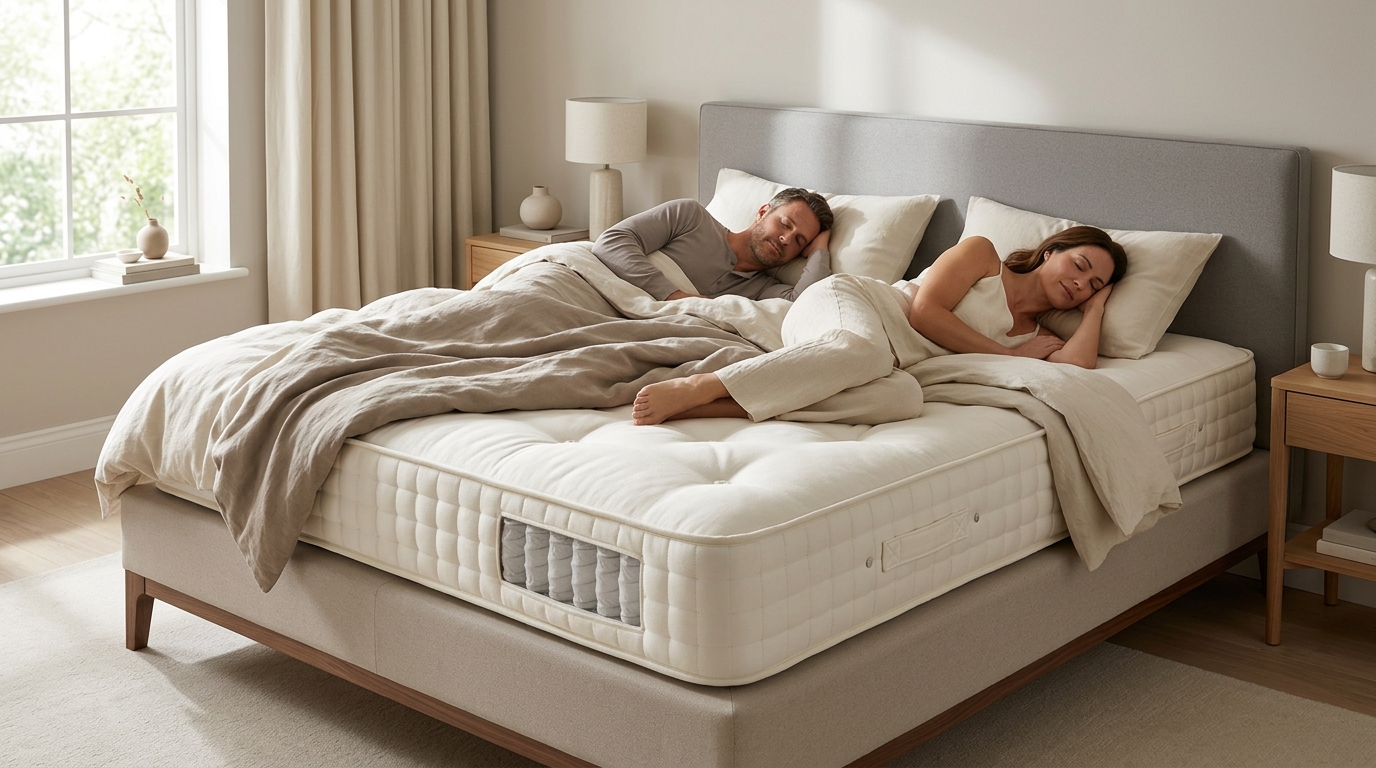
You lie down exhausted. Eight hours later, you wake up still tired — and your lower back is already complaining before you've had a single cup of coffee. Sound familiar? You're not alone. Millions of people are sleeping on the wrong mattress without even realising it, and the cost isn't just discomfort — it's disrupted deep sleep, slower recovery, and chronic pain that creeps into every part of your day. If you've been searching for the best mattress for deep sleep and back support, this guide was written for you.
I've spent years researching, testing, and writing about sleep. I've made every mattress mistake in the book — bought too soft, went too firm, ignored temperature entirely — and I want to save you from the same frustration. Let's get into what actually works.
Key Takeaways
- The best mattress for deep sleep balances pressure relief, spinal alignment, and temperature regulation
- Medium-firm mattresses suit most sleepers — but body weight and position matter more than firmness alone
- Memory foam excels at pressure relief; hybrid mattresses offer the best all-around balance
- Cooling is essential for uninterrupted deep sleep — many people overlook this
- A mattress should last 7–10 years; durability and trial periods are non-negotiable
- Your sleeping position is more important than the brand name on the label
Table of Contents
- Quick Answer for Busy Readers
- Why Your Mattress Has More Impact on Deep Sleep Than Most People Realize
- What Most People Get Wrong: Comfort vs Support
- Comparing the Main Mattress Types
- Sleeping Position Matters More Than Brand Names
- Where Things Get Real: Back Pain Changes Everything
- How Pressure Relief Improves Deep Sleep
- Hot Sleepers Are Buying the Wrong Mattress
- Best Mattress for Couples
- Ignoring Body Weight: A Common Mistake
- Mattress Comparison Table
- Mattress Durability and Lifespan
- Step-by-Step Guide to Choosing the Right Mattress
- Common Mattress Buying Mistakes
- Sleep Science Most Competitors Never Talk About
- Modern Sleep Technology and AI Tools
- Real-Life Use Cases
- Frequently Asked Questions
- Final Buying Framework

What Is the Best Mattress for Deep Sleep and Back Support? (Quick Answer for Busy Readers)
The best mattress for deep sleep and back support is one that keeps your spine in a neutral position, relieves pressure at the hips and shoulders, and doesn't trap heat. For most sleepers, a medium-firm hybrid or memory foam mattress hits that sweet spot — offering both contouring comfort and responsive support without letting you sink too deep.
That said, there's no one-size-fits-all answer. Your body weight, sleeping position, and whether you run hot at night all change the equation significantly.
Quick Mattress Recommendations by Sleep Need
- Best for lower back pain: Medium-firm hybrid with zoned lumbar support
- Best for side sleepers: Medium memory foam or soft hybrid
- Best for back sleepers: Medium-firm latex or hybrid
- Best for couples: Memory foam or premium pocket sprung hybrid
- Best for hot sleepers: Pocket sprung, latex, or cooling hybrid
- Best for heavier individuals: Firm hybrid with high-density support layers (25cm+ depth)
Why Your Mattress Has More Impact on Deep Sleep Than Most People Realize
Understanding Deep Sleep and Sleep Recovery
Deep sleep — specifically stage 3 NREM sleep — is where your body does most of its repair work. Growth hormone is released, muscles rebuild, and your immune system strengthens. If you're waking up groggy despite eight hours in bed, you're probably not spending enough time in this stage.
Poor mattress support disrupts this cycle constantly. Every time your pressure points ache or your spine falls out of alignment, your nervous system pulls you toward a lighter sleep stage. You may not remember waking — but your body notices.
The Link Between Sleep Position and Spinal Alignment
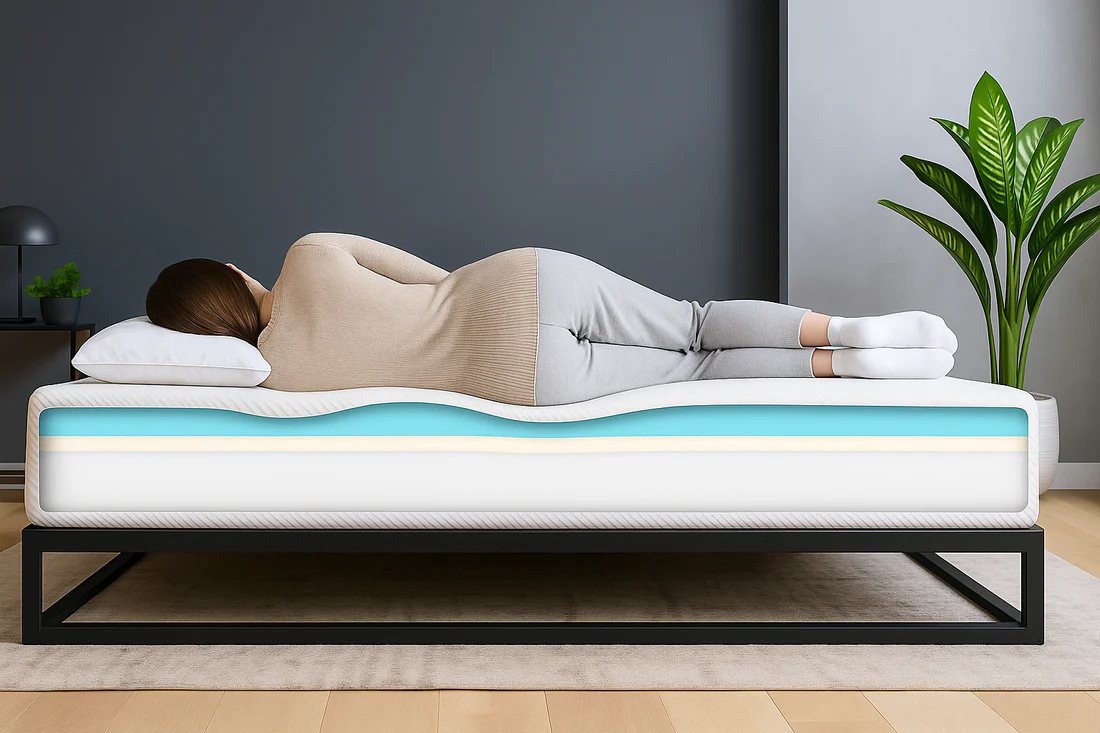
Your spine has a natural S-curve. A good mattress preserves that curve regardless of your sleep position. When the mattress is either too soft (letting the hips sink too far) or too firm (creating pressure at the shoulder and hip bones), that curve gets distorted.
Over time, poor alignment causes muscle tension, nerve compression, and the kind of morning back pain that becomes a daily ritual you'd rather not have. I've seen this firsthand — switching from a too-soft memory foam to a medium-firm hybrid eliminated my own lower back stiffness within two weeks.
Signs Your Mattress Is Disrupting Your Sleep
- You wake up stiff or sore, especially in the lower back or hips
- You toss and turn more than you used to
- You feel rested after sleeping elsewhere (a hotel bed, a guest room)
- Your mattress has visible sags or dips
- You feel tired despite technically getting enough hours of sleep
How does a mattress affect sleep quality? A mattress affects sleep quality by influencing spinal alignment, pressure distribution, temperature regulation, and motion transfer. Poor support creates pain signals that fragment sleep, while proper support keeps the body comfortable enough to reach and stay in deep sleep stages.
What Most People Get Wrong Is Confusing Comfort With Support
Why a Soft Mattress Isn't Always Better
Soft mattresses feel luxurious in the shop. Five minutes of lying down and you think, "this is the one." But comfort in the showroom and comfort at 3am are very different things.
When a mattress is too soft, heavier body parts — particularly the hips — sink deeper than the shoulders. This creates a hammock effect that rounds the lower spine. After a few hours, that position causes pain. Excess sinkage is one of the most common reasons people wake up with back discomfort after sleeping on "soft" beds.
Why a Firm Mattress Isn't Always Better for Back Pain
Firm mattresses have a reputation for being "good for your back." It's a persistent myth. A mattress that's too firm doesn't contour to your body's shape — it pushes back against your pressure points instead. For side sleepers especially, a firm surface puts direct pressure on the shoulder and hip bone, which is painful and disruptive.
Finding the Ideal Balance
Medium-firm is the sweet spot for most adults. It supports the lumbar region without pushing hard against hip bones or shoulders. That said, body weight shifts the equation — lighter sleepers (under 60kg) often do better on medium-soft, while heavier sleepers (over 100kg) may need something firmer to avoid bottoming out.
The golden rule: your spine should look straight when viewed from the side while you're lying down. If your hips are dropping or your waist is arching, the firmness is off.
Comparing the Main Mattress Types for Deep Sleep and Back Support
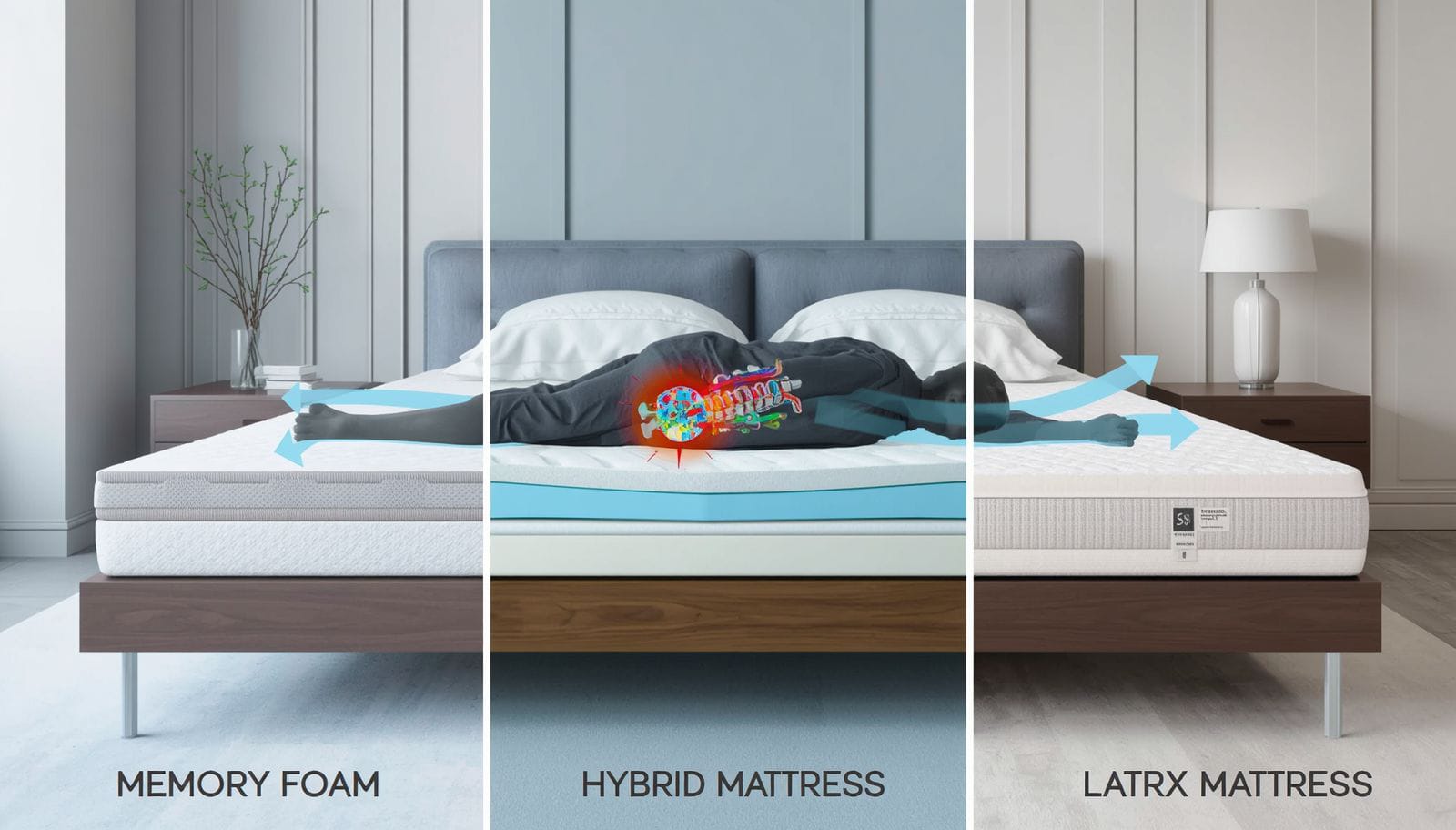
Which mattress type is best for back support? Hybrid mattresses generally offer the best back support because they combine foam or latex comfort layers with an innerspring core that keeps the spine properly aligned. Memory foam is excellent for pressure relief, while pocket sprung mattresses excel in airflow and responsiveness.
Memory Foam Mattresses
Memory foam contours closely to the body and excels at pressure relief. It isolates motion brilliantly — ideal for couples. The downside? Traditional memory foam retains heat, which can disrupt deep sleep. Modern open-cell or gel-infused versions have improved significantly, but they still run warmer than springs or latex.
Hybrid Mattresses
Hybrids combine foam or latex comfort layers with a pocket spring core. They're the most popular option in 2026 for a reason — they offer the contouring of foam with the support and airflow of springs. For most sleepers looking for mattresses that improve sleep quality, a hybrid is the go-to recommendation.
Pocket Sprung Mattresses
Each spring moves independently, providing targeted support and excellent airflow. They're responsive (you don't feel "stuck"), cool, and durable. Motion isolation is weaker than memory foam, but premium pocket sprung models close the gap. A great option for hot sleepers and those who prefer a traditional bouncy feel.
Latex Mattresses
Natural latex is responsive, cooling, and remarkably durable — often lasting 12–15 years. It doesn't contour as deeply as memory foam, which actually makes it better for back sleepers who don't want to sink. It's also naturally hypoallergenic. The catch is cost — quality latex mattresses aren't cheap.
Orthopedic Mattresses
The term "orthopedic" is largely unregulated — any brand can use it. What it typically means is a firmer mattress with a focus on support. They're not medically prescribed and aren't automatically superior for back pain. Look beyond the label and focus on the actual construction materials and firmness ratings instead.
Also read: Orthopedic Mattress for Back Pain Relief: What Actually Works (and What Most People Regret Buying)
In My Experience, Sleeping Position Matters More Than Brand Names
Best Mattress for Side Sleepers
Side sleeping is the most common position — and the most demanding for a mattress. Your shoulder and hip need to sink slightly to keep your spine straight. Go too firm and those pressure points scream. A medium to medium-soft mattress with good contouring — memory foam or a soft hybrid — is the sweet spot here.
Best Mattress for Back Sleepers
Back sleepers need the lumbar region supported without being pushed upward. A medium-firm mattress keeps the natural curve intact. Latex and hybrids work particularly well here because they offer both support and a little give under the lumbar area.
Best Mattress for Stomach Sleepers
Stomach sleeping is hard on the spine — full stop. But if you're a committed stomach sleeper, you need a firmer surface to prevent the hips from sinking and arching the lower back excessively. A firm hybrid or firm latex prevents that dreaded lower back hyperextension.
Best Mattress for Combination Sleepers
If you move around all night, you need a responsive mattress that doesn't make you fight to change position. Hybrids and pocket sprung mattresses excel here. Memory foam — especially older, denser foam — can feel like quicksand when you're trying to roll over.

This Is Where Things Get Real: Back Pain Changes Everything
What mattress is best for lower back pain? A medium-firm hybrid mattress with zoned support is the most recommended option for lower back pain. Zoned support means different areas of the mattress have different firmness levels — firmer under the lumbar and hips, softer under the shoulders. This keeps the spine neutral and reduces pressure on aggravated areas.
Why Some Mattresses Cause Lower Back Pain
Sagging support layers are the number one culprit. Even a mattress that was once supportive can cause back pain once the foam or springs start to break down — usually around the 5–7 year mark. An uneven surface forces the spine into unnatural positions night after night.
Features That Help Reduce Back Pain
- Zoned support: Targeted firmness where you need it most
- High-density foam layers: Resist compression over time
- Lumbar reinforcement: Extra support in the middle third of the mattress
- Pressure redistribution: Spreads body weight more evenly
Best Mattress Characteristics for Chronic Back Discomfort
For anyone dealing with ongoing back issues, the priority is spinal neutrality above all else. The mattress should maintain the spine's natural curve without forcing it. Avoid mattresses with a single-firmness foam core and no zoning — they treat every part of your body the same, which is not how bodies work.
How Pressure Relief Improves Deep Sleep and Recovery
Pressure Points That Interrupt Sleep
The main pressure offenders for most sleepers are the shoulders, hips, and lower back. When these areas experience prolonged pressure, your brain registers discomfort and nudges you toward lighter sleep. You may not fully wake — but you lose valuable time in the deep and REM stages where real recovery happens.
Why Less Pressure Means Less Tossing and Turning
Every time you shift position in the night, you're briefly interrupting your sleep cycle. Pressure relief reduces the need to move. Fewer movements mean more continuous sleep — and that means more time in restorative deep sleep stages. It's that straightforward.
Memory Foam vs Hybrid vs Latex for Pressure Relief
- Memory foam: Best pressure relief overall; hugs curves most closely
- Hybrid: Excellent pressure relief with better bounce and airflow
- Latex: Good pressure relief with more responsiveness; doesn't sink as deeply
I've Seen This Happen Many Times: Hot Sleepers Buy the Wrong Mattress
How Temperature Affects Deep Sleep
Your core body temperature naturally drops as you enter deep sleep. If your mattress is trapping heat, it works against this process. The result? You wake up sweaty, you toss around more, and you spend less time in the deep and REM stages. Temperature is one of the most underestimated factors in sleep quality.
Cooling Technologies That Actually Matter
- Open-cell foam: Allows air to circulate through the foam structure
- Gel-infused foam: Draws heat away from the body
- Breathable covers: Tencel, bamboo, or open-knit fabrics help
- Pocket spring base: Creates natural airflow channels beneath comfort layers
What is the best cooling mattress for deep sleep? Pocket sprung, hybrid, and latex mattresses are the best cooling options. All three allow better airflow than solid memory foam. For hot sleepers, a hybrid with an open-cell foam comfort layer and a breathable cover is the most practical choice available in 2026.
Best Mattress Types for Hot Sleepers
In order of cooling performance: pocket sprung, latex, hybrid with cooling foam, and finally memory foam (even gel-infused). If you regularly overheat at night, avoid any mattress that's primarily dense foam — regardless of what the cooling marketing says.
Best Mattress for Couples Who Want Better Sleep
Motion Isolation Explained
If your partner's midnight trip to the bathroom wakes you up, your mattress has poor motion isolation. Memory foam absorbs movement and prevents it from travelling across the surface. Pocket sprung mattresses do reasonably well too, since each spring moves independently.
Edge Support Considerations
Couples use more of the mattress surface than solo sleepers. Edge support stops the sides from compressing dramatically when you sit or sleep near them — giving you the full usable surface area you paid for. Hybrid mattresses with reinforced perimeter coils offer the best edge support.
Best Mattress Types for Couples
- Memory foam: Best for motion isolation; ideal if one partner is restless
- Premium hybrid: Best all-round — motion isolation, support, cooling, and edge support
- Pocket sprung: Good option if both partners run hot
Also read: Best Sleep Solution for Couples: How to Finally Sleep Better Together Without Compromising Comfort
Honestly, I Made This Mistake Too: Ignoring Body Weight
Why Body Weight Changes Mattress Performance
The same mattress feels completely different depending on your body weight. A medium-firm mattress might feel perfectly supportive for someone at 75kg but far too soft for someone at 110kg. Weight affects how deeply you compress the comfort layers — and therefore how much the support core actually engages.
Best Mattress for Lightweight Sleepers (Under 60kg)
Lightweight sleepers don't compress firm mattresses enough to feel their support. Go softer — medium or medium-soft — to ensure the mattress actually contours and relieves pressure at the hips and shoulders.
Best Mattress for Average-Weight Sleepers (60–100kg)
Medium-firm is the gold standard here. Most mattresses are designed and tested with this weight range in mind, so the widest range of options will work well for you.
Best Mattress for Heavy Sleepers (Over 100kg)
Look for high-density foam (minimum 40kg/m³), strong coil counts in the support layer, and a total mattress height of at least 25–30cm. Flimsy comfort layers compress too quickly, leaving you sleeping effectively on a hard base with no pressure relief. Durability is especially important at higher weights.
Mattress Comparison Table: Which Option Wins?
Side-by-Side Comparison
| Feature | Memory Foam | Hybrid | Pocket Sprung | Latex | Orthopedic |
| Deep Sleep Potential | High | Very High | High | High | Medium |
| Pressure Relief | Excellent | Very Good | Good | Good | Fair |
| Cooling | Poor–Fair | Good–Very Good | Excellent | Very Good | Varies |
| Motion Isolation | Excellent | Very Good | Good | Good | Fair |
| Back Support | Very Good | Excellent | Good | Very Good | Good |
| Durability | 7–10 years | 8–12 years | 7–10 years | 12–15 years | 7–10 years |
| Cost | Low–Medium | Medium–High | Medium | High | Medium |
| Ease of Movement | Poor–Fair | Good | Very Good | Very Good | Fair |
| Best For | Couples, pain relief | Most sleepers | Hot sleepers | Durability seekers | Firm preference |
Most People Ignore This Part: Mattress Durability and Lifespan
How Long Should a Good Mattress Last?
A quality mattress should give you 7–10 years of reliable support. Latex stretches that to 12–15 years. Budget foam mattresses may start sagging within 3–4 years — which is when back problems often start creeping in.
Signs It's Time to Replace Your Mattress
- Visible sagging or body impressions deeper than 2–3cm
- Increased morning back or joint pain compared to a year ago
- You sleep better in hotels or on other mattresses consistently
- The mattress is over 8 years old
- You can feel springs through the surface
Cost Per Year Analysis
A £1,200 hybrid lasting 10 years costs £120 per year — or about £0.33 per night. A £400 budget mattress that degrades in 4 years costs £100 per year. The "expensive" option is often the better value. Factor in the cost of chronic back pain treatment and the value equation shifts even further.
Step-by-Step Guide to Choosing the Best Mattress for Deep Sleep and Back Support
How to choose a mattress for back support: Start by identifying your sleep position and body weight, then narrow down firmness level, then consider cooling needs and motion isolation. Finally, prioritise brands offering at least a 100-night trial so you can test it properly at home.
Step 1 – Identify Your Sleeping Position
Side, back, stomach, or combination? This determines the firmness range you should be shopping in before anything else.
Step 2 – Assess Current Sleep Problems
Are you waking with pain? Overheating? Being disturbed by a partner? Each problem points to a different feature priority.
Step 3 – Determine Preferred Firmness
Use your sleep position and weight as your guide. When in doubt, medium-firm works for the majority of adult sleepers.
Step 4 – Consider Body Weight
Under 60kg: medium-soft. 60–100kg: medium to medium-firm. Over 100kg: firm with high-density support layers.
Step 5 – Evaluate Cooling Needs
If you regularly sweat at night or sleep in a warm room, prioritise pocket sprung, latex, or hybrid mattresses over solid memory foam.
Step 6 – Check Motion Isolation Requirements
Sharing a bed with a restless sleeper? Memory foam or a quality hybrid is your best friend here.
Step 7 – Compare Trial Periods and Warranties
A minimum 100-night trial is the industry standard. Be wary of any brand that doesn't offer one — it suggests they're not confident you'll keep the mattress. Look for warranties of at least 10 years.
Step 8 – Test for Proper Spinal Alignment
Once the mattress arrives, lie in your usual sleep position and have someone check your spine alignment, or use a sleep tracking app to measure movement and restoration over the first two weeks.
Common Mattress Buying Mistakes That Hurt Sleep Quality
Buying Based Only on Price
Cheapest is not the same as worst, but the mattress market rewards quality in measurable ways. A budget mattress that collapses in three years is not a bargain.
Ignoring Sleeping Position
The single biggest mistake I see. People buy based on general "back pain" marketing without considering that their side-sleeping body needs something completely different to a back sleeper.
Choosing the Wrong Firmness
Always check firmness relative to your weight and sleep position, not just by lying on it in a showroom for five minutes while fully clothed.
Overlooking Cooling Features
Night sweats wreck sleep quality. If you run warm, this should be near the top of your checklist — not an afterthought.
Keeping an Old Mattress Too Long
Emotional attachment to a mattress is real — but a sagging surface is silently destroying your sleep and your back. If it's over 8 years old, it's time to move on.
Ignoring Trial Periods
Your body needs 30–60 nights to truly adapt and evaluate a new mattress. A trial period isn't a luxury — it's essential. Don't buy any mattress without one.
Sleep Science Most Competitors Never Talk About
How Mattress Quality Affects REM and Deep Sleep
Studies consistently show that pressure points and spinal misalignment are associated with more frequent micro-arousals during sleep — brief moments when your brain surfaces from deeper sleep stages without you fully waking. Over a full night, these accumulate and leave you sleep-deprived despite adequate hours in bed. A mattress that eliminates these interruptions measurably improves time spent in restorative deep and REM sleep.
Pressure Redistribution and Recovery Metrics
Athletes and high performers increasingly use sleep tracking data to evaluate how mattress choices affect recovery scores. Heart rate variability (HRV) during sleep — a key recovery metric — improves when physical discomfort is removed from the sleep equation.
Recovery Sleep for Athletes
For athletes, deep sleep is training. Muscle repair, hormonal regulation, and cognitive performance all depend on it. A mattress that supports spinal neutrality and reduces pressure interruptions isn't just a comfort choice — it's a performance choice.
Also read: How to Make Your Bed Feel Like a Luxury Hotel: The Ultimate Guide to Five-Star Sleep
Modern Sleep Technology, AI Tools, and Mobile Apps
AI-Powered Sleep Tracking Tools
- Oura Ring: Tracks sleep stages, HRV, and body temperature with impressive accuracy
- Whoop: Focused on recovery metrics; ideal for athletes wanting sleep performance data
- Garmin: Solid built-in sleep tracking for existing Garmin watch users
Using Sleep Data to Evaluate Mattress Performance
Use the baseline data from your first two weeks on a new mattress to track whether deep sleep duration is improving, movement frequency is decreasing, and recovery scores are trending upward. If they're not improving after 30 nights, that's useful data — not just a feeling.
AI Insights vs Personal Sleep Experience
Sleep trackers give you patterns and trends — they don't tell you what to do. The best approach combines objective data with your own experience. A great recovery score that comes with a sore back every morning still means the mattress needs to change.
Real-Life Use Cases: Which Mattress Should You Choose?
Office Worker With Chronic Back Pain
After sitting all day, lumbar support while sleeping is critical. A medium-firm hybrid with zoned support will decompress the spine overnight and reduce the cumulative tension that builds from a desk job.
Side Sleeper With Shoulder Pressure
A medium memory foam or soft hybrid allows the shoulder to sink enough to remove direct pressure while keeping the spine aligned. This one change can eliminate shoulder pain that wakes people up at night.
Athlete Focused on Recovery
A medium-firm latex or hybrid supports muscle recovery through proper spinal alignment and temperature regulation. Pair with a sleep tracker and you'll see HRV improvements within weeks of switching from a worn-out mattress.
Senior Seeking Joint Support
Medium-firm with excellent pressure relief and low motion transfer. Memory foam hybrids offer the gentlest transition in and out of bed combined with meaningful joint support overnight.
Hot Sleeper in a Warm Climate
Pocket sprung or latex, full stop. Pair with a breathable Tencel or bamboo cover and avoid any mattress marketed purely on memory foam, regardless of how many cooling gel claims are on the label.
Couple With Different Sleep Preferences
A zoned hybrid or dual-firmness mattress (available from several premium brands) lets each partner have the firmness they need without compromise. At minimum, choose a mattress with excellent motion isolation and strong edge support.
Heavy Sleeper Requiring Enhanced Support
High-density foam (40kg/m³+), reinforced coil base, and 25–30cm total height. This isn't a premium preference — it's a functional necessity for proper support and durability above 100kg.
Frequently Asked Questions
What is the best mattress for deep sleep and back support?
A medium-firm hybrid mattress with zoned support is the best all-round choice for deep sleep and back support. It combines pressure relief, spinal alignment, and temperature regulation for most sleeper types.
Is a firm mattress better for back pain?
Not necessarily. A mattress that's too firm can cause pressure buildup and worsen back pain, especially for side sleepers. Medium-firm is generally more effective for back pain than very firm options.
What mattress type provides the best spinal alignment?
Hybrid and latex mattresses provide the best spinal alignment for most sleepers, offering support that doesn't allow excess sinkage while still contouring to natural body curves.
Can a mattress improve sleep quality?
Yes, significantly. Research shows that replacing an old or unsupportive mattress can increase deep sleep duration, reduce movement frequency, and improve morning pain levels within 30 days.
Which mattress is best for side sleepers with back pain?
A medium memory foam or soft hybrid with good shoulder relief and lumbar support. The shoulder must be able to sink slightly while the lumbar region stays supported.
What firmness level is ideal for deep sleep?
Medium-firm (around 5–6 on a 10-point scale) is optimal for most adults. It provides enough support to maintain alignment without creating pressure points that interrupt sleep.
Are hybrid mattresses worth it?
Yes, for most sleepers. Hybrids combine the pressure relief of foam with the support, airflow, and responsiveness of springs — making them the most versatile option currently available.
How long does a supportive mattress last?
A quality hybrid or memory foam mattress lasts 7–10 years. Latex can last 12–15 years. Budget mattresses may begin failing in 3–5 years.
What is zoned support?
Zoned support means different areas of the mattress have different firmness or tension levels. Firmer zones support the lumbar and hips; softer zones allow the shoulders to decompress. It's one of the most effective features for back pain relief.
Can a mattress help reduce tossing and turning?
Yes. Tossing and turning is often a response to pressure discomfort. A mattress that relieves pressure points reduces the need to shift positions — leading to fewer disruptions and more continuous deep sleep.
What causes back pain from a mattress?
Sagging support layers, incorrect firmness for your weight and sleep position, and lack of lumbar support are the main causes. An old mattress that has lost its structural integrity is the most common culprit.
Which mattress is best for couples?
A memory foam or premium hybrid with strong motion isolation and good edge support. For couples with different sleep preferences, a zoned hybrid or dual-firmness model is ideal.
Final Buying Framework: Choosing the Right Mattress Based on Your Sleep Profile
Choose Memory Foam If...
- Pressure relief is your top priority
- You share a bed and need motion isolation
- You experience hip, shoulder, or joint pain
- You don't overheat at night
Choose Hybrid If...
- You want the best combination of support, pressure relief, and cooling
- You're a combination sleeper who moves positions
- You need both back support and comfort in one mattress
Choose Pocket Sprung If...
- You consistently sleep hot and need maximum airflow
- You prefer a responsive, traditional-feel mattress with bounce
- Cooling is a higher priority than motion isolation
Choose Latex If...
- Longevity and value-over-time matter most to you
- You prefer natural, sustainable materials
- You want cooling with good support and don't need deep contouring
The best mattress for deep sleep and back support isn't a brand — it's the right combination of firmness, materials, and features for your specific body, position, and sleep challenges. Use this guide as your filter, not a shortcut to a single product name. Your sleep — and your back — will thank you for getting it right.
Start by identifying your sleeping position and biggest current sleep problem. Those two answers alone will narrow the field dramatically. Then prioritise the trial period. No matter how much research you've done, a mattress needs to be tested in your bed, in your home, for at least 30 nights. Anything less is guesswork.