
Finding the best memory foam mattress in Portugal is harder than most people expect. You walk into a showroom or scroll online, feel something soft for thirty seconds, and assume it will solve your nights. Then summer hits in the Algarve or a restless partner keeps waking you, and the mattress that felt perfect in the store suddenly feels wrong. I’ve watched this cycle play out with friends, clients, and more than a few of my own early purchases. The right colchão viscoelástico can deliver genuine pressure relief and quieter sleep, but only if it matches your body, your climate, and how you actually use the bed.
Key Takeaways
- No single mattress is best for everyone in Portugal — sleeping position, body weight, heat sensitivity and shared use matter more than marketing labels.
- Density and firmness are not the same thing; higher density improves durability but does not automatically make a mattress firmer.
- Traditional memory foam can retain heat; open-cell, gel-infused or hybrid constructions usually sleep cooler in Portuguese summers.
- Always prioritise exact dimensions, trial length and warranty over price alone.
- A simple scoring system and short physical test beat any “best overall” list.
Table of Contents
- Quick Answer: What Is the Best Type of Memory Foam Mattress for Most People in Portugal?
- What Is a Memory Foam Mattress and Why Do Portuguese Buyers Call It a Colchão Viscoelástico?
- In My Experience, “Memory Foam” on the Label Does Not Tell You Enough
- What Most People Get Wrong About Foam Density and Firmness
- I’ve Seen This Happen Many Times: A Mattress Feels Great for Five Minutes but Wrong After a Full Night
- Honestly, I Made This Mistake Too: Choosing the Softest Mattress Because It Felt Comfortable at First
- Which Memory Foam Firmness Is Best for Your Sleeping Position?
- Most People Ignore This Part: Will Memory Foam Be Too Hot in Portugal?
- Memory Foam vs Pocket Sprung: Which Is Better for Portugal?
- Memory Foam vs Hybrid vs Latex: The Quick Decision Guide
- This Is Where Things Get Real for Couples: Motion Isolation and Different Preferences
- Best Memory Foam Mattress Use Cases
- Portugal Mattress Sizes: Don’t Order the Wrong Size
- I’ve Seen Buyers Focus on Price and Forget the Cost of Replacing a Bad Mattress
- Comparison Table: The Best Ways to Compare Memory Foam Mattresses
- AI Tools Can Help You Compare Mattresses, but They Cannot Feel the Mattress for You
- Pros and Cons of Memory Foam Mattresses
- Mistakes Beginners Make When Buying a Memory Foam Mattress
- Step-by-Step: How to Choose the Best Memory Foam Mattress in Portugal
- How to Score Every Mattress Before You Buy
- Quick Answers to the Questions Buyers Ask Before Ordering
- Final Buying Framework: Which Memory Foam Mattress Is Right for You?
Quick Answer: What Is the Best Type of Memory Foam Mattress for Most People in Portugal?
The best memory foam mattress in Portugal depends on your sleeping position, body weight, preferred firmness, whether you sleep hot, if the bed is shared, your budget, and local delivery plus warranty options. A good choice balances pressure relief with support and temperature management rather than chasing the softest or thickest model. No single mattress works for everyone.
What Is a Memory Foam Mattress and Why Do Portuguese Buyers Call It a Colchão Viscoelástico?
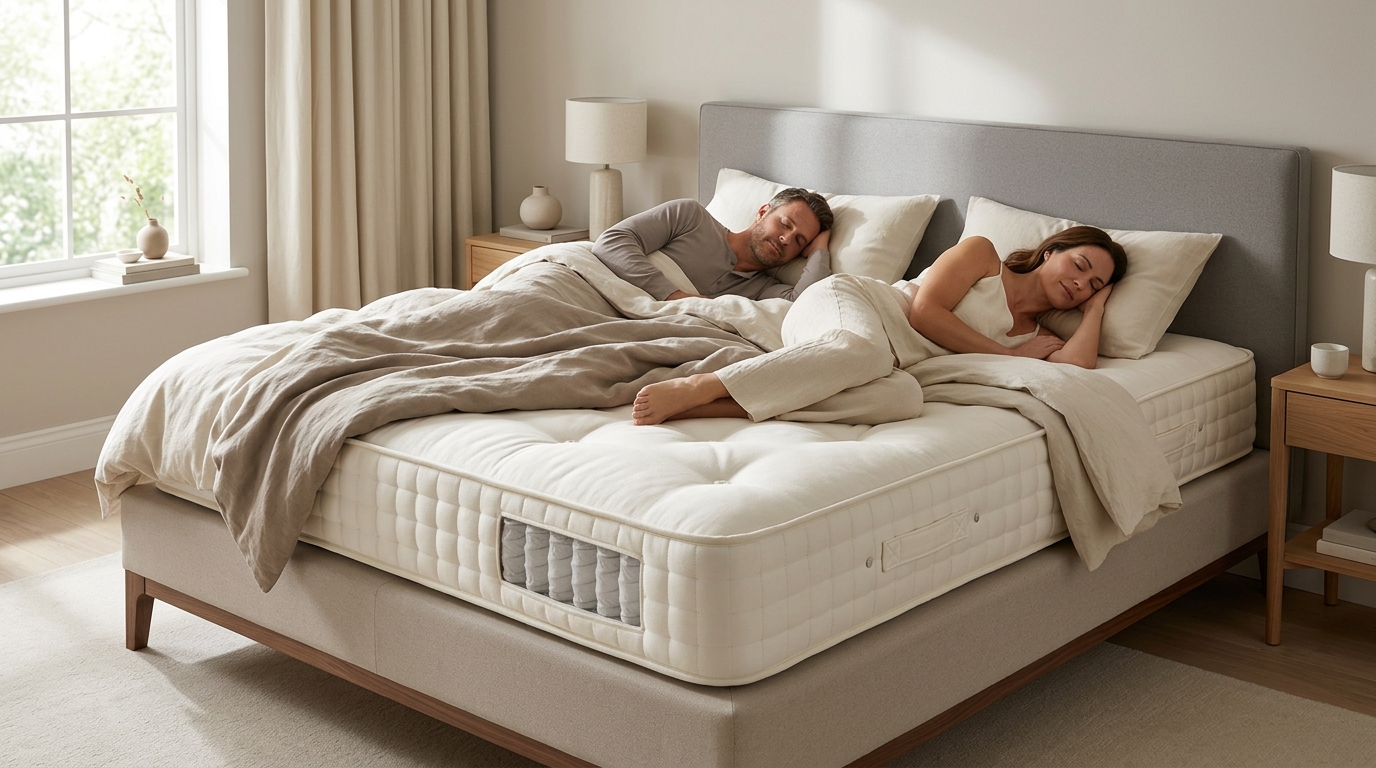
Memory foam, also called viscoelastic foam, espuma de memória or colchão viscoelástico, is a polyurethane foam that softens with body heat and pressure then slowly returns to shape. When you lie down it contours around shoulders and hips, spreading weight instead of creating sharp pressure points.
Most modern mattresses combine a comfort layer of memory foam with a denser support core. The comfort layer does the hugging; the core keeps your spine aligned. Portuguese retailers use “viscoelástico” almost interchangeably with memory foam, so searching for both terms helps when comparing local stock.
What Memory Foam Actually Does When You Lie on It
Pressure spreads across a larger surface area. Shoulders and hips sink a little while the lower back stays supported. The response is slower than springs, which is why some people love the “hug” and others feel stuck. Two mattresses labelled memory foam can feel completely different because density, thickness and layer order vary widely.
In My Experience, “Memory Foam” on the Label Does Not Tell You Enough
I’ve tested dozens of models in showrooms and at home. Two products both marketed as premium memory foam can differ dramatically in density, firmness, height, cooling and support. Buying purely on the name is one of the fastest ways to end up disappointed.
What to Check Beyond the Marketing Name
- Thickness of the memory foam comfort layer
- Construction of the support core
- Overall mattress height
- Foam density when disclosed
- Stated firmness
- Cooling features and cover materials
- Edge support
- Warranty length and trial conditions
What Most People Get Wrong About Foam Density and Firmness
Higher density can improve durability and contouring quality, but it does not automatically make a mattress feel firmer. Density measures how much material is packed into a given volume. Firmness describes how the surface feels when you lie on it. A high-density soft foam and a lower-density firm foam can feel opposite.
Where manufacturers publish density figures, higher numbers often correlate with better long-term resistance to permanent compression. Still, the complete layer design matters more than any single number.
How Firmness Changes for Different Body Weights
The same mattress feels softer to a heavier person and firmer to a lighter one. Lightweight sleepers usually need less support and can sink too far into a soft surface. Average-weight sleepers have the widest choice. Heavier sleepers need a stronger support core so the hips do not drop excessively.
Medium vs Medium-Firm vs Firm Memory Foam
Medium tends to suit side sleepers who want contouring. Medium-firm is the most versatile for combination and back sleepers. Firm works better for stomach sleepers or those who prefer minimal sink. Always link the choice to your main sleeping position rather than the marketing label alone.
I’ve Seen This Happen Many Times: A Mattress Feels Great for Five Minutes but Wrong After a Full Night
Short showroom tests miss delayed pressure points, heat build-up and the effort of changing positions. What feels plush at first can leave shoulders aching or the lower back unsupported by morning. Always check trial length before buying.
How to Test a Memory Foam Mattress Properly
- Lie in your normal sleeping position
- Stay long enough to notice pressure points
- Check shoulder and hip comfort
- Assess spinal alignment
- Change positions several times
- Test edge stability
- If buying as a couple, check movement transfer
- Review verified specifications before purchase
Honestly, I Made This Mistake Too: Choosing the Softest Mattress Because It Felt Comfortable at First
Softness and long-term comfort are not the same. Excessive sink can misalign the spine even while the surface feels luxurious for the first few minutes. Balanced pressure relief plus support almost always wins after a full night.
Which Memory Foam Firmness Is Best for Your Sleeping Position?
Best for Side Sleepers
Prioritise enough contouring at the shoulders and hips without the mid-section collapsing. Lighter side sleepers often prefer medium; heavier ones may need medium-firm to keep the spine level.
Best for Back Sleepers
Look for balanced support that keeps the lumbar area from sinking. Overly soft constructions allow the hips to drop and create morning stiffness.
Best for Stomach Sleepers
Excessive softness is usually problematic. A more supportive surface helps keep the lower back from arching.
Best for Combination Sleepers
Very slow-responding foam can make position changes feel sticky. Slightly more responsive memory foam or a hybrid often works better.

Most People Ignore This Part: Will Memory Foam Be Too Hot in Portugal?
In warmer regions and during Algarve summers, traditional closed-cell memory foam can hold heat around the body. Not every viscoelastic mattress sleeps the same, however. Construction makes the difference.
What Makes a Memory Foam Mattress Cooler?
- Open-cell foam structure
- Ventilation channels
- Gel or phase-change materials when genuinely present
- Breathable covers
- Thoughtful layer order
- Good room ventilation and appropriate bedding
Evaluate the whole mattress, not a single marketing claim.
When a Hybrid Mattress May Be Better in Portugal
Hybrids combine a memory foam comfort layer with pocket springs. The springs improve airflow and responsiveness while still offering contouring. For hot sleepers or those who dislike the slow “stuck” feeling, hybrids are often the smarter middle ground.

Memory Foam vs Pocket Sprung: Which Is Better for Portugal?
| Feature | Memory Foam | Pocket Sprung |
| Pressure relief | Usually stronger | Moderate |
| Motion isolation | Excellent | Good but less |
| Cooling | Variable | Generally better airflow |
| Bounce / ease of movement | Lower | Higher |
| Edge support | Varies widely | Often stronger |
| Couples | Strong for motion isolation | Good all-round |
| Typical value | Wide range | Wide range |
There is no universal winner. Choose based on your priorities.
Choose Memory Foam If Your Priority Is...
- Maximum pressure relief
- Deep body contouring
- Minimal partner disturbance
- A close hugging feel
Choose Pocket Springs If Your Priority Is...
- Better airflow potential
- Traditional bounce
- Easier movement
- A more buoyant surface
Memory Foam vs Hybrid vs Latex: The Quick Decision Guide
| Category | Feel | Pressure Relief | Cooling | Motion Isolation | Responsiveness | Typical Budget |
| All-foam memory | Hugging | High | Variable | Excellent | Low | Mid |
| Hybrid | Balanced | High | Better | Very good | Medium-high | Mid-high |
| Latex | Responsive | Good | Usually cool | Good | High | Higher |
Also read: Best Sleep Solution for Couples: How to Finally Sleep Better Together Without Compromising Comfort
This Is Where Things Get Real for Couples: Motion Isolation and Different Preferences
Memory foam remains popular with couples because it absorbs movement well. Different sleep schedules, body weights and preferred firmness still create challenges.
How to Test Motion Isolation
One partner lies still while the other changes position, gets in and out of bed, and sits near the edge. Notice how much movement transfers. Comfort layers and overall construction both influence the result.
What If You and Your Partner Want Different Firmness Levels?
A balanced medium-firm is the most common compromise. A thin topper on one side can help in some cases. True split-firmness options exist but are less common in Portugal. Avoid assuming one firmness will automatically satisfy both people.
Best Memory Foam Mattress Use Cases
Best for Couples
Strong motion isolation, decent edge support and a firmness that works for both body weights.
Best for Hot Sleepers
Open-cell or hybrid designs, breathable covers, and attention to bedroom ventilation and bedding.
Best for Side Sleepers
Enough comfort-layer thickness for shoulder and hip relief without mid-section collapse.
Best for Back Sleepers
Balanced support that keeps the lumbar region level.
Best for Heavier Sleepers
Robust support core, appropriate firmness and durable foam.
Best for People Upgrading From an Old Spring Mattress
Expect less bounce and a period of adaptation to the contouring feel. Give yourself a few weeks before judging.
Also read: Best Mattress for Back Pain in 2026: What Actually Helped Me Sleep Without Waking Up Sore
Portugal Mattress Sizes: Don’t Order the Wrong Size
Size names can differ between retailers and international sites. Always check exact centimetre dimensions against your bed base and available space. Measure doorways and stairs if delivery access is tight. International guides often assume UK or US sizing, which does not always match Portuguese stock.
I’ve Seen Buyers Focus on Price and Forget the Cost of Replacing a Bad Mattress
Cheap up front can become expensive if the mattress sags in two years. Factor in purchase price, expected usable life, warranty, trial or return costs, delivery and eventual disposal. A simple cost-per-year calculation often changes the ranking of options.
Budget vs Premium Memory Foam: What Are You Actually Paying For?
Better foam quality, smarter layer design, superior covers, genuine cooling features, stronger warranties and more reliable delivery. Expensive does not automatically equal best for your body and climate.
Comparison Table: The Best Ways to Compare Memory Foam Mattresses
| Method | Best for | Strength | Limitation | What to verify |
| Manufacturer specs | Layer details | Precise numbers | Marketing language | Density, thickness, materials |
| Showroom testing | Feel | Real experience | Short time | Trial length after purchase |
| Independent reviews | Patterns | Multiple users | Varying standards | Test methods used |
| Customer reviews | Long-term feedback | Real homes | Subjective | Similar body type and climate |
| Comparison spreadsheet | Organisation | Side-by-side clarity | Data quality | Source of every number |
AI Tools Can Help You Compare Mattresses, but They Cannot Feel the Mattress for You
AI is excellent at organising specifications, building scorecards and spotting missing information. It cannot tell you how the surface will feel after six hours or whether both partners will like the same model. Always verify claims against original product data.
Simple AI-Assisted Mattress Comparison Workflow
- Collect verified specifications
- Record size, firmness and price
- Note layer construction and cooling features
- Add warranty and trial details
- List your personal priorities
- Use AI to organise the comparison
- Double-check every important claim
- Test physically where possible
Pros and Cons of Memory Foam Mattresses
Pros
- Strong pressure-relieving potential
- Excellent body contouring
- Usually strong motion isolation
- Quiet
- Wide range of firmness options
Cons
- Some models retain heat
- Slower response can feel restrictive
- Edge support varies
- Quality differences are large
- New foam can have an initial odour
Mistakes Beginners Make When Buying a Memory Foam Mattress
- Assuming every memory foam mattress feels the same
- Confusing density with firmness
- Choosing by thickness or price alone
- Ignoring sleeping position and body weight
- Overlooking heat retention in Portuguese summers
- Skipping the support core details
- Ordering the wrong size
- Ignoring trial and warranty conditions
- Believing cooling claims without checking construction
- Buying for only one partner’s needs

Step-by-Step: How to Choose the Best Memory Foam Mattress in Portugal
- Identify your main sleeping position
- Consider body weight and support needs
- Decide preferred firmness range
- Assess whether overheating is a major concern
- Decide how important motion isolation is
- Compare memory foam with hybrid and pocket-sprung options
- Examine foam and layer construction
- Measure your bed and confirm exact dimensions
- Compare Portugal delivery options
- Check trial, return and warranty terms
- Calculate value, not just purchase price
- Score shortlisted models
- Test where possible
- Decide using both verified data and personal comfort
How to Score Every Mattress Before You Buy
Score each option from 1 to 5 on comfort, support, pressure relief, cooling, motion isolation, edge support, ease of movement, durability indicators, warranty, value and Portugal availability. Weight the scores according to your priorities. Hot sleepers raise the cooling weight; couples raise motion isolation and edge support; side sleepers raise pressure relief.
Quick Answers to the Questions Buyers Ask Before Ordering
What Is the Best Memory Foam Mattress in Portugal?
It depends on the sleeper. Use the scoring method and comparison criteria above rather than any single product claim.
Is Memory Foam Too Hot for Portugal?
Some models retain more heat. Open-cell, gel or hybrid constructions plus good bedroom ventilation reduce the problem.
What Memory Foam Density Is Best?
There is no universal number. Separate density from firmness and judge the complete construction.
Is Memory Foam Good for Couples?
Yes for motion isolation. Edge support and different firmness preferences still need attention.
Is Memory Foam Better Than Pocket Springs?
It depends on whether you prioritise contouring and stillness or airflow and bounce.
How Long Does a Memory Foam Mattress Last?
Lifespan varies with materials, construction, body weight, usage and care. Higher-quality foam usually lasts longer.
How Thick Should a Memory Foam Mattress Be?
Total construction matters more than thickness alone. A well-designed thinner mattress can outperform a poorly designed thick one.
Should I Buy Online or From a Showroom in Portugal?
Showrooms allow testing; online often offers longer trials and easier returns. Compare both for your shortlist.
Does Memory Foam Need a Special Base?
Most modern models work on solid platforms or slatted bases with suitable gap spacing. Check the manufacturer’s recommendation.
Can I Use a Topper with Memory Foam?
Yes, but it changes the feel and can affect heat and motion isolation. Choose carefully.
Final Buying Framework: Which Memory Foam Mattress Is Right for You?
Need maximum pressure relief → prioritise contouring comfort layers.
Sleep hot → prioritise breathable construction and cooling performance.
Sleep with a restless partner → prioritise motion isolation.
Prefer easier movement → look at responsive foam or hybrids.
Have different body weights → prioritise balanced support.
Want maximum value → compare cost, construction, warranty and expected life.
Live in a hot part of Portugal → give extra weight to cooling and ventilation.
Shortlist checklist: confirm exact size, verify layer details, check trial and warranty, score against your priorities, and test if possible. Then choose the mattress that matches your real nights, not the five-minute showroom impression.